
 English
 русский
 عربى
عربى






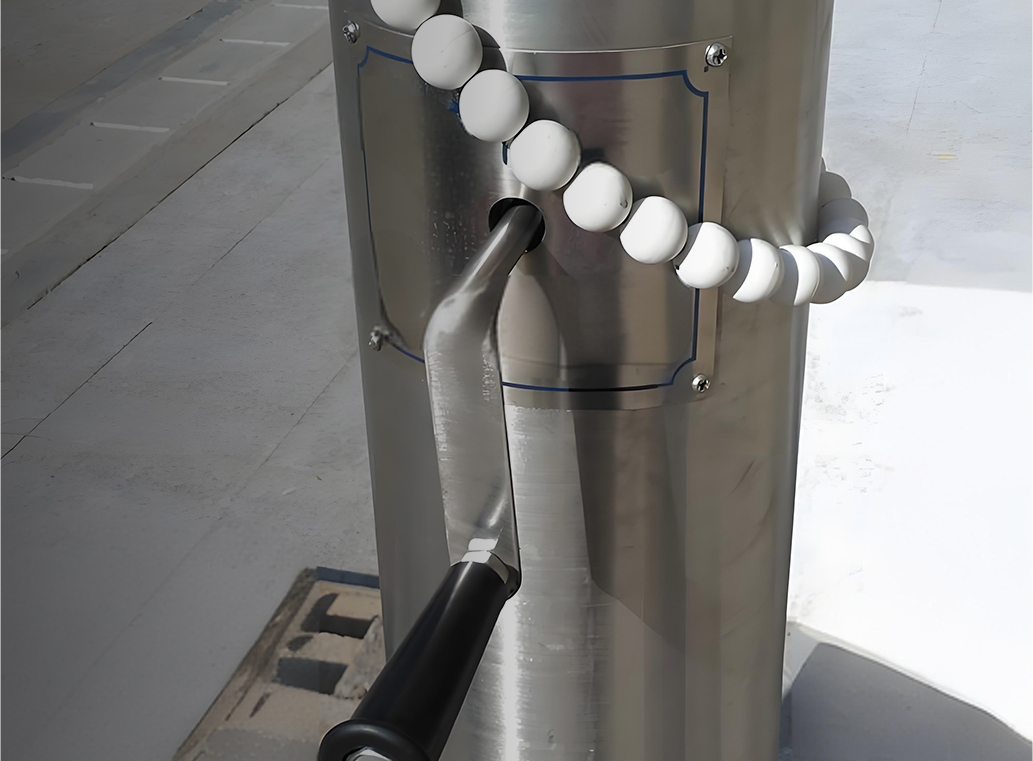

Flagpoles stand as proud symbols, gracing homes, businesses, and public spaces alike. While various materials are used in their construction, stainles......
READ MORESubmit feedback
How can I determine the height of a flagpole?
Flag Size, Pole Height, and the Rule That Connects Them
The standard flag size for a flagpole follows a widely accepted proportion rule: the flag's length (fly dimension) should equal approximately one quarter of the pole height. A 20-foot flagpole flies a 3x5 foot flag. A 25-foot flagpole flies a 4x6 foot flag. A 40-foot flagpole flies a 6x10 foot flag. This relationship ensures the flag looks proportionally correct against the pole height from a normal viewing distance, neither too small to be seen clearly nor so large that it overwhelms the pole structure or wraps around it in moderate wind.
What is the height of the flagpole for residential use? Most residential Outdoor Flagpoles are 20 to 25 feet (6 to 7.6 meters) tall. Commercial and government flagpoles typically range from 25 to 100 feet (7.6 to 30.5 meters). The correct height for any specific installation depends on the scale of the building, the available setback from property lines and overhead obstacles, and any local zoning height restrictions.
How to attach flag to rope on flagpole uses snap hooks (also called flag clips) that clip through the grommets at the hoist edge of the flag onto the halyard (the rope running from the truck at the top of the pole down to the cleat on the pole base). The correct method positions the flag so that it hangs straight and free without twisting.
Flagpole Flag Size: The Complete Sizing Guide for Every Pole Height
Flagpole flag size selection is the most common practical question for anyone installing an Outdoor Flagpole for the first time. The flag must be large enough to be visible and proportionally impressive from the intended viewing distance, but not so large that it exceeds the pole's structural capacity, wraps around the pole in wind, or creates safety hazards in high-wind conditions. The proportion rule provides a practical starting point, but actual selection also considers flag material weight, local wind conditions, and the flagpole's rated wind load capacity.
The One-Quarter Pole Height Rule for Flag Length
The conventional guideline used by the flag industry, the US Flag Code, and flag pole manufacturers globally is that the flag's fly length (the longer horizontal dimension) should be approximately one quarter of the pole height. The flag's standard aspect ratio (length to width) for most national flags is approximately 1.9:1, meaning a flag with a 10-foot fly would be approximately 5 to 6 feet wide on the hoist. This proportion is based on aesthetic experience: smaller flags appear insignificant and are difficult to read from street level, while larger flags impose structural loads and wind resistance that can damage both the flag and the pole in normal operating conditions.
Standard Flag Size for Flagpole: Reference Table by Pole Height
| 15 feet | 4.6 m | 2 x 3 ft or 3 x 5 ft | 6 to 15 | Small garden, driveway |
| 20 feet | 6.1 m | 3 x 5 ft | 15 | Residential home |
| 25 feet | 7.6 m | 4 x 6 ft | 24 | Residential or small business |
| 30 feet | 9.1 m | 5 x 8 ft | 40 | Small commercial building |
| 40 feet | 12.2 m | 6 x 10 ft | 60 | Commercial building, dealership |
| 50 feet | 15.2 m | 8 x 12 ft | 96 | Government building, large commercial |
| 60 feet | 18.3 m | 10 x 15 ft | 150 | Municipal plaza, large institution |
| 80 feet | 24.4 m | 12 x 18 ft or 15 x 25 ft | 216 to 375 | State building, sports facility |
| 100 feet | 30.5 m | 20 x 30 ft | 600 | Federal building, landmark |
Find the Height of the Flagpole: Methods for Unknown Installations
If you are adding a flag to an existing Outdoor Flagpole whose original specification documents are unavailable, or if you need to find the height of the flagpole before ordering a replacement flag, several practical measurement methods are available. The method you choose depends on the tools available and the accuracy required.
Method 1: Direct Measurement with a Long Tape
If the flagpole can be safely lowered (jointed sections can often be disassembled, and some poles have internal halyards that lower the entire top section), the most accurate measurement is direct measurement with a long tape measure. Lay the pole sections on the ground, measure each section length separately, and sum the totals. For a permanently installed pole that cannot be lowered, direct measurement requires a surveyor's measuring pole, a very long tape, or drone-based measurement.
Method 2: Shadow Ratio Method to Find the Height of the Flagpole
The shadow ratio method requires no special equipment and is accurate to within 5% for most outdoor conditions on a sunny day:
- On a clear day, stand next to the flagpole and measure your own height in feet or meters. Record this as H (your height).
- Measure the length of your shadow from the tip of your feet to the tip of your shadow. Record this as S1 (your shadow length).
- Immediately (within 2 to 3 minutes, before the sun angle changes significantly) measure the length of the flagpole's shadow from the pole base to the shadow tip. Record this as S2 (pole shadow length).
- Calculate the pole height using the proportion: Pole height = H multiplied by (S2 divided by S1).
Example: Your height is 5.75 feet. Your shadow is 8.2 feet. The pole's shadow is 34.5 feet. Pole height = 5.75 multiplied by (34.5 divided by 8.2) = 5.75 multiplied by 4.21 = approximately 24.2 feet. This result indicates a 25-foot flagpole. The small discrepancy arises from the shadow tip being diffuse rather than a precise point, which is why the result should be rounded to the nearest standard pole height increment (15, 20, 25, 30, 40, 50 feet).
Method 3: Clinometer or Angle Measurement
A smartphone clinometer app (freely available for iOS and Android) measures the angle of elevation to the top of the flagpole from a known distance. From a measured horizontal distance D from the pole base, the pole height equals D multiplied by the tangent of the elevation angle measured with the clinometer. Add your eye height above ground to account for the fact that the measurement origin is not at ground level. This method is accurate to within 2% to 3% for measurements at distances of 1 to 1.5 times the estimated pole height and is particularly useful when shadows are unavailable due to overcast skies.
What Is the Height of the Flagpole: Standard Heights by Installation Type
The question of what is the height of the flagpole is answered differently depending on the installation type, the relevant codes and guidelines governing the installation, and the practical considerations of site visibility and structural engineering. The following reference covers the most common installation categories.
Residential Outdoor Flagpoles
Residential Outdoor Flagpoles in the United States are most commonly available and specified at 20 and 25 feet. A 20-foot pole at a single-family home provides good visibility from the street without dominating the property aesthetically, and flies the standard 3x5 foot American flag that is sold in every hardware and flag store as the most common residential size. A 25-foot residential pole flies a 4x6 foot flag and provides better visibility on larger lots or properties set back more than 30 to 40 feet from the street. Some jurisdictions impose height limits on residential flagpoles through local zoning ordinances; common limits are 25 feet for residential zones, 35 feet for commercial zones, and unlimited for institutional and government properties. Verify your local regulations before specifying pole height.
Commercial and Business Outdoor Flagpoles
Commercial properties including retail stores, car dealerships, hotels, and office buildings typically use Outdoor Flagpoles of 30 to 50 feet to achieve visibility from the road and to project a presence appropriate to the scale of the building. Car dealerships are among the most prominent commercial flagpole users, typically installing multiple 30 to 40-foot poles along the street frontage flying brand flags and promotional banners alongside national and state flags. The rule of thumb for commercial flagpole height is that the pole height should be equal to or greater than the height of the tallest visible facade of the building it serves, ensuring that the flag flies above the building's roofline and is visible from a distance rather than appearing to be surrounded by or below the structure it represents.
Government and Institutional Outdoor Flagpoles
Federal and state government buildings, military installations, schools, and universities use flagpoles at heights determined by the hierarchy of the institution and the symbolic importance of the flag display. The US Flag Code provides guidance on the relative positions of the national, state, and organizational flags when multiple poles are used. Government flagpoles typically range from 30 to 80 feet for standard installations, with landmark poles at iconic sites (Fort McHenry, the National Mall, state capitals) reaching 60 to 100 feet or more. Military installations follow branch-specific flag regulations that prescribe pole heights and flag sizes for parade grounds, headquarters buildings, and entry gates.
Stadium and Special Event Poles
Sports stadiums, convention centers, and exhibition grounds use poles from 50 to 120 feet to achieve visibility across large open spaces and for dramatic visual effect during national anthems and ceremonial occasions. Stadium poles must also be engineered for the higher structural loads generated by large flags (20x30 feet or larger) at altitude, including the amplified dynamic loading from flag flutter and the increased wind exposure at elevated positions around large open venues.
How to Attach Flag to Rope on Flagpole: Step-by-Step Instructions
Knowing how to attach flag to rope on flagpole correctly is essential for safe, secure, and respectful flag display. An incorrectly attached flag can slip down the halyard, twist, or detach entirely, which creates both a safety hazard and a flag code concern. The standard attachment method uses snap hooks (flag clips) that clip through the grommets on the flag's hoist edge onto the halyard rope.
Equipment Needed to Attach Flag to Rope
- The flag: With two brass, stainless steel, or reinforced grommets on the hoist (short) edge, positioned approximately 1 to 2 inches from the top and bottom corners of the hoist edge.
- Snap hooks (flag clips): Spring-loaded metal clips that fasten through the flag's grommets and clip onto the halyard. Brass snap hooks are the most common and appropriate for outdoor use; stainless steel is preferred for coastal and marine environments where salt air would corrode brass over time.
- The halyard: The rope that runs continuously from the cleat at the pole base, up through the truck (pulley system) at the top of the pole, and back down to the cleat. Most standard Outdoor Flagpoles use 1/4 inch to 5/16 inch diameter braided polyester or nylon halyard.
Step-by-Step: How to Attach Flag to Rope on Flagpole
- Pull the halyard down from the truck at the top of the pole to the ground. Untie the halyard from the cleat at the pole base and lower the rope to ground level so both sides of the continuous loop are accessible. Identify which side of the loop runs up to the truck from the raising side (this is the side the flag attaches to).
- Separate the two strands of halyard. The halyard forms a continuous loop with one side going up one face of the truck's pulley and coming down the other. Hold the two strands apart and identify the raising strand (the one that, when pulled down, will raise the flag) and the idle strand (the one that comes down as the raising strand is pulled).
- Attach the first snap hook to the top grommet of the flag. Open the snap hook's gate spring by pressing the clip's release, pass the gate through the flag's top grommet, and then clip the snap hook onto the halyard near the level of the pole truck (so the flag will reach the top of the pole when fully raised). Ensure the snap hook is oriented so the gate faces away from the pole to prevent the hook from snagging on the pole surface during raising.
- Attach the second snap hook to the bottom grommet of the flag. Open the second snap hook, pass its gate through the flag's bottom grommet, and clip it onto the halyard at a position below the first hook equal to the hoist length of the flag (the width of the flag, which is the shorter dimension). For a standard 3x5 foot flag, the two snap hooks should be 3 feet apart on the halyard.
- Verify the flag orientation before raising. When attached correctly and held up at the hoist edge with the snap hooks toward the pole, the flag should hang with the canton (the blue field with stars on a US flag, or the equivalent top-left corner element on any other national flag) in the upper left corner as viewed from the front (the side facing away from the pole). If the canton appears in the wrong position, the flag is upside down and must be reattached.
- Raise the flag by pulling the raising strand of the halyard. Pull steadily and evenly, keeping the flag clear of the ground and the pole. Do not let the flag touch the ground during raising as required by flag etiquette protocols. Raise the flag briskly and smartly to the truck (the top of the pole) as directed by flag code for national flags.
- Secure the halyard to the cleat. Once the flag is at the top of the pole (or at half-staff if specified), wrap the halyard in a figure-eight pattern around the cleat's two horns and secure with a finishing hitch. Ensure the halyard is tightly cleated to prevent the metal snap hooks from striking the pole in wind, which creates the familiar clanging noise that disturbs neighbors and indicates a maintenance issue.
Anti-Wrap and Wind Management for Attached Flags
- Rotating truck (swivel assembly): The truck at the top of the pole should be a free-rotating model that allows the entire flag and halyard system to rotate 360 degrees around the pole in response to wind direction changes. A non-rotating truck prevents this alignment, causing the flag to wrap around the pole when the wind direction shifts.
- Anti-wrap arms or outrigger brackets: A horizontal arm or bracket at the top of the pole holds the halyard attachment point away from the pole surface, giving the flag a clear space between itself and the pole to rotate without contacting the pole. These are particularly effective on shorter poles in gardens and residential settings.
- Tangle-free swivel snap hooks: Swivel snap hooks (snap hooks with a rotating swivel between the hook and the flag grommet) allow the flag to rotate relative to the hook, reducing torsional wrap loading that accumulates when standard snap hooks are used in rotating wind conditions.
Outdoor Flagpoles: Types, Materials, and Selection Guide
Outdoor Flagpoles are available in a wide range of materials, shapes, and installation configurations. The correct selection depends on the installation site, the flag size to be flown, the local wind environment, aesthetic requirements, and budget. Understanding the differences between the main types prevents both costly over-specification and the performance failures that result from under-specification in exposed locations.
Aluminum Outdoor Flagpoles: The Most Common Choice
Aluminum flagpoles dominate the residential and light commercial Outdoor Flagpoles market because they offer an excellent combination of low weight, corrosion resistance, structural strength, and competitive cost. Most aluminum flagpoles for residential and commercial use are fabricated from 6063-T6 or 6061-T6 aluminum alloy extrusion in a tapered or straight profile, with wall thickness of 0.188 to 0.250 inches for standard poles and 0.250 to 0.375 inches for heavy-duty commercial applications.
An aluminum flagpole does not rust and requires essentially no maintenance beyond occasional washing to remove dirt and oxidation film, making it the lowest-maintenance Outdoor Flagpole option over a 20 to 30 year service life. Aluminum poles are available in standard clear anodized finish (silver), dark bronze anodized, and painted finishes including white and hunter green that match common building color schemes.
Steel and Galvanized Steel Flagpoles
Steel flagpoles offer higher structural strength per unit diameter than aluminum, making them the appropriate choice for very tall poles (above 50 feet) where wind loading calculations require a pole cross-section that cannot be economically achieved in aluminum at the required wall thickness. Steel poles are typically manufactured from ASTM A595 or A500 structural steel tube in standard or taper configurations, hot-dip galvanized to ASTM A123 for corrosion protection, and finish-painted with a direct-to-metal or two-component urethane topcoat system.
The main disadvantage of steel outdoor flagpoles compared to aluminum is the need for more frequent maintenance to prevent rust progression through the galvanized coating, particularly at cut ends, welded joints, and any surface damage that breaches the coating. In coastal environments, a damaged galvanized coating will rust within months under salt air exposure, requiring more frequent paint maintenance than aluminum alternatives.
Fiberglass Outdoor Flagpoles
Fiberglass flagpoles combine the corrosion resistance of non-metallic materials with the structural stiffness needed for tall flag display. They are the preferred choice for installations near electrical infrastructure (substations, transmission lines) where a conductive metal pole would create safety hazards, and for coastal and tropical marine environments where even galvanized steel and aluminum face aggressive atmospheric corrosion. Fiberglass flagpoles are also completely immune to the lightning strike risk associated with tall metal structures, though a separate lightning protection system is still recommended for any tall structure in lightning-prone regions.
Internal vs External Halyard Systems
Standard residential Outdoor Flagpoles use external halyard systems where the rope runs on the outside of the pole and is cleated to the exterior surface. This is the simplest and lowest-cost arrangement but exposes the halyard to UV degradation and creates the characteristic rope-on-pole clanging noise in wind. Premium commercial and government Outdoor Flagpoles use internal halyard systems where the rope runs inside a hollow pole and connects to the flag through a slotted access panel near the pole base. Internal halyard systems provide a cleaner appearance, eliminate the clanging noise, and resist vandalism and unauthorized lowering because the halyard is inaccessible without a key to the lockable access panel. Internal halyard Outdoor Flagpoles cost approximately 30% to 60% more than external halyard equivalents of the same height, but are widely preferred for schools, government buildings, and commercial properties where security and appearance are priorities.
Installing Outdoor Flagpoles: Foundation, Depth, and Practical Considerations
The structural integrity of any Outdoor Flagpole depends as much on the foundation installation as on the pole itself. An undersized or improperly constructed foundation causes poles to lean, settle unevenly, or in extreme cases topple in high winds, creating safety hazards and requiring expensive remediation.
Ground Sleeve vs Direct Burial Installation
Outdoor Flagpoles are installed using one of two foundation methods: ground sleeve installation, where a steel sleeve is embedded in concrete and the pole slips into and is secured within the sleeve, and direct burial installation, where the pole's base section is embedded directly into concrete. Ground sleeve installation is strongly preferred for most residential and commercial applications because it allows the pole to be removed from the sleeve for maintenance, transport, or replacement without disturbing the foundation. The sleeve remains in the concrete permanently, and a new or repaired pole can be reinstalled in the same sleeve.
Foundation Depth and Concrete Specifications
Foundation depth for Outdoor Flagpoles follows a general guideline of embedding the pole or ground sleeve to a depth of approximately 10% of the total pole height, plus an additional 2 feet below the frost line in cold climates where ground freezing would otherwise apply uplift forces to a shallower foundation. For a 25-foot residential pole, this means a minimum foundation depth of 2.5 feet (10% of 25) plus frost depth, giving a total foundation depth of 4 to 5 feet in most northern US and northern European climates.
The concrete used for flagpole foundations should reach a minimum compressive strength of 3,000 psi (20.7 MPa) at 28 days, specified as concrete mix design 3000 PSI or C25 in European specification. The foundation diameter should be at least 3 times the pole base diameter to provide adequate moment resistance against wind overturning forces. For a 25-foot pole with a 4-inch base diameter, a 12-inch diameter round concrete caisson to the required depth is the minimum foundation specification.
Flag Care and Halyard Maintenance for Outdoor Flagpoles
Proper care of both the flag and the halyard system on Outdoor Flagpoles significantly extends the service life of both and maintains the dignified appearance that flag display requires. Neglected flags and worn halyard systems project an impression of institutional carelessness that defeats the purpose of flying a flag in the first place.
Flag Inspection and Replacement Schedule
All outdoor flags deteriorate over time from UV radiation, wind loading, rain, and pollution. The appropriate replacement schedule depends on the flag material, the wind exposure level, and the intensity of continuous flying:
- Nylon flags (the most common material for outdoor use): Replace when any tearing at the fly end extends more than 3 to 4 inches from the corner, when any fraying is visible from street level viewing distance, or when color fading is severe enough to make the flag design unclear. Typical service life in average wind exposure is 3 to 6 months of continuous flying, or 12 to 24 months if flown only on designated occasions.
- Polyester flags (for high-wind environments): More durable than nylon in high winds but less colorful and slightly heavier. Service life in high-wind coastal locations is typically 6 to 12 months of continuous flying.
- Cotton flags (for ceremonial indoor use): Cotton flags are not appropriate for continuous outdoor flying and should only be used for ceremonial occasions or sheltered indoor display. Cotton deteriorates rapidly from UV and moisture when used outdoors.
Halyard Maintenance and Replacement
The halyard on an external halyard Outdoor Flagpole should be inspected monthly for wear, UV degradation, and fraying. A halyard that has become stiff, discolored, or shows surface fiber breaks is approaching failure and should be replaced before it breaks during raising or lowering. A halyard that breaks while the flag is at the top of the pole requires a professional climber or lift equipment to retrieve the flag and rethread the halyard through the truck, which is expensive and avoidable with proactive replacement. Standard braided polyester halyard has a service life of 2 to 5 years in average outdoor conditions. Replace the halyard when it shows any of these signs: stiffness or color change from UV degradation, fraying of surface strands, or any visible flat-spotting from cleat wear at the cleating position.
Frequently Asked Questions
1. What is the correct flagpole flag size for a 25-foot pole?
The correct flagpole flag size for a 25-foot Outdoor Flagpole is 4 x 6 feet, following the industry standard guideline that the flag's fly length should be approximately one quarter of the pole height. A 4-foot fly on a 25-foot pole is exactly 16% of the pole height in the width dimension and the flag's 6-foot length represents approximately 24% of the pole height, producing the proportionally balanced appearance that looks correct from street-level viewing distances. A 3x5 foot flag is slightly small but acceptable on a 25-foot pole; a 5x8 foot flag would be too large and is more appropriate for a 30 to 35-foot pole.
2. What is the standard flag size for flagpole installations in government buildings?
The standard flag size for flagpole installations at government buildings depends on the pole height, which varies by building type. For a typical 40-foot government building flagpole, the standard flag size is 6x10 feet. For a 50-foot pole, 8x12 feet is standard. For major government landmarks on 60-foot poles, 10x15 feet is the typical specification. The US Department of Defense, General Services Administration, and Veterans Affairs all publish specific flag and pole specifications for federal properties that prescribe exact flag dimensions for each authorized pole height. State and local governments follow similar institutional guidelines aligned with the federal framework.
3. How do I find the height of the flagpole without special equipment?
The easiest method to find the height of the flagpole without special equipment is the shadow ratio method on a sunny day. Measure your own height and the length of your shadow. Immediately measure the pole's shadow. Divide the pole shadow length by your shadow length, then multiply by your height. The result is the approximate pole height. For example, if you are 6 feet tall, your shadow is 9 feet, and the pole shadow is 37.5 feet, the pole height is 6 multiplied by (37.5 divided by 9) = 25 feet. This method is accurate to within 5% and requires only a tape measure. Alternatively, a free smartphone clinometer app used from a measured distance produces similar accuracy through angle calculation.
4. How to attach flag to rope on flagpole using snap hooks?
To attach flag to rope on flagpole using snap hooks: lower the halyard to ground level. Attach the first snap hook through the flag's top grommet and clip it onto the halyard near the top position. Attach the second snap hook through the flag's bottom grommet and clip it onto the halyard at a distance below the first hook equal to the flag's hoist width. Verify that the canton (top-left corner element) is in the upper left position when the hoist edge faces toward the pole. Raise the flag briskly to the top of the pole (or to half-staff as appropriate) and secure the halyard tightly to the cleat in a figure-eight pattern to prevent the hardware from clanging against the pole in wind.
5. What is the height of the flagpole for a standard residential installation?
What is the height of the flagpole for a standard residential installation in the United States? The most common residential flagpole heights are 20 feet and 25 feet. A 20-foot pole is appropriate for most single-family homes on standard lots, flying a 3x5 foot flag and achieving good visibility from the street without appearing disproportionately tall relative to a typical one or two-story home. A 25-foot pole suits larger homes, properties with more generous setbacks from the street, or homeowners who want the greater visual impact of a 4x6 foot flag. Some local zoning ordinances limit residential flagpoles to 25 feet; verify your local regulations before ordering any height above this threshold.
6. What type of halyard rope is best for Outdoor Flagpoles?
Braided polyester rope is the best halyard material for most Outdoor Flagpoles because it combines low UV degradation, good strength, minimal stretch, and resistance to moisture absorption that would add weight and accelerate biological deterioration. A 5/16 inch diameter polyester braid is the standard specification for residential and light commercial flagpoles up to 40 feet. For larger commercial poles, 3/8 inch or 1/2 inch diameter is appropriate. Avoid natural fiber ropes (cotton, manila) for permanent outdoor halyards because they absorb moisture, weaken when wet, and are susceptible to biological decay. Avoid polypropylene rope, which degrades rapidly under UV and becomes brittle after 1 to 2 years of outdoor exposure.
7. Do local regulations restrict the height of Outdoor Flagpoles at residential properties?
Yes, many municipalities regulate the height of Outdoor Flagpoles at residential properties through local zoning ordinances. Common residential height limits are 25 feet in most suburban residential zones, though this varies significantly by jurisdiction. Some areas exempted flagpoles from height limits following the Freedom to Display the American Flag Act (2005), but local ordinances still regulate placement, setback from property lines, number of poles, and occasionally size. Before purchasing any residential Outdoor Flagpole above 20 feet, contact your local planning or zoning department to confirm the applicable regulations. Condominium associations, homeowner associations, and historic district review boards may also impose additional restrictions beyond municipal zoning requirements.
8. What is the difference between an internal and external halyard flagpole?
An external halyard flagpole has the rope running on the outside of the pole, secured to a cleat mounted on the exterior pole surface. It is the standard and lower-cost arrangement for residential Outdoor Flagpoles. An internal halyard flagpole has the rope running inside the hollow pole, accessed through a lockable hinged door near the pole base. Internal halyard systems cost 30% to 60% more but provide a cleaner appearance with no rope visible on the pole surface, eliminate the rope-on-pole clanging noise from wind, and prevent unauthorized lowering of the flag because the halyard is secured behind a locked access door. Internal halyard poles are the standard for government buildings, schools, and commercial properties where security and appearance are priorities.
9. How often should I replace the flag on an Outdoor Flagpole?
For flags flown continuously outdoors in average wind exposure, nylon flags typically require replacement every 3 to 6 months before tearing and fraying become visually significant. In low-wind sheltered locations, the same flag may last 12 to 18 months. In high-wind coastal or mountain environments, replacement every 6 to 8 weeks may be necessary to maintain an appropriate appearance. Inspect the flag monthly for fraying at the fly end, torn corners, fading that makes the design unclear, and grommet damage that could cause the flag to detach from the snap hooks. US Flag Code protocol requires prompt replacement of any flag that is no longer a fitting emblem for display, meaning any flag showing visible deterioration from street level should be retired and replaced.
10. Can I fly multiple flags on a single Outdoor Flagpole?
Yes, two or three flags can be flown on a single Outdoor Flagpole using multiple snap hook attachment points on the halyard, with each flag attached at intervals corresponding to its hoist width. When flying multiple flags on one pole in the United States, the US Flag Code specifies that the American flag must always be at the peak (the highest position) and no other flag may be placed above it. The second flag is attached below the first with its top grommet at the position corresponding to the bottom of the national flag above. Flying multiple flags requires adjusting the flagpole flag size for each flag downward from the single-flag standard to ensure that the combined height of all flags does not exceed approximately 80% of the pole height, leaving clear pole visible above and below the flag cluster for structural and aesthetic balance.
Previous Post
What Size Flag Should You Use for a 20 ft Flagpole and How Do You Prevent a Flag from Wrapping Around a Flagpole?
Next Post
How Does Aluminum Alloy Flagpole Construction Affect Durability And Aesthetic Performance?
News
-
-
1. Understanding the Importance of Regular Maintenance for Aluminum Alloy Flagpoles Regular maintenance of your aluminum alloy flagpole is essential ......
READ MORE -
Unique advantages of aluminum alloy: Why it is the preferred material for flagpoles In today's society, flagpoles are not only a tool for displaying f......
READ MORE -
What is the aluminum alloy electric intelligent lifting conical flagpole? The aluminum alloy electric intelligent lifting conical flagpole is a high-e......
READ MORE

Copyright Jiangsu Shengqi Weiye Intelligent Technology Co., Ltd. All Rights Reserved.
 Custom Commercial Flagpoles Suppliers