
 English
 русский
 عربى







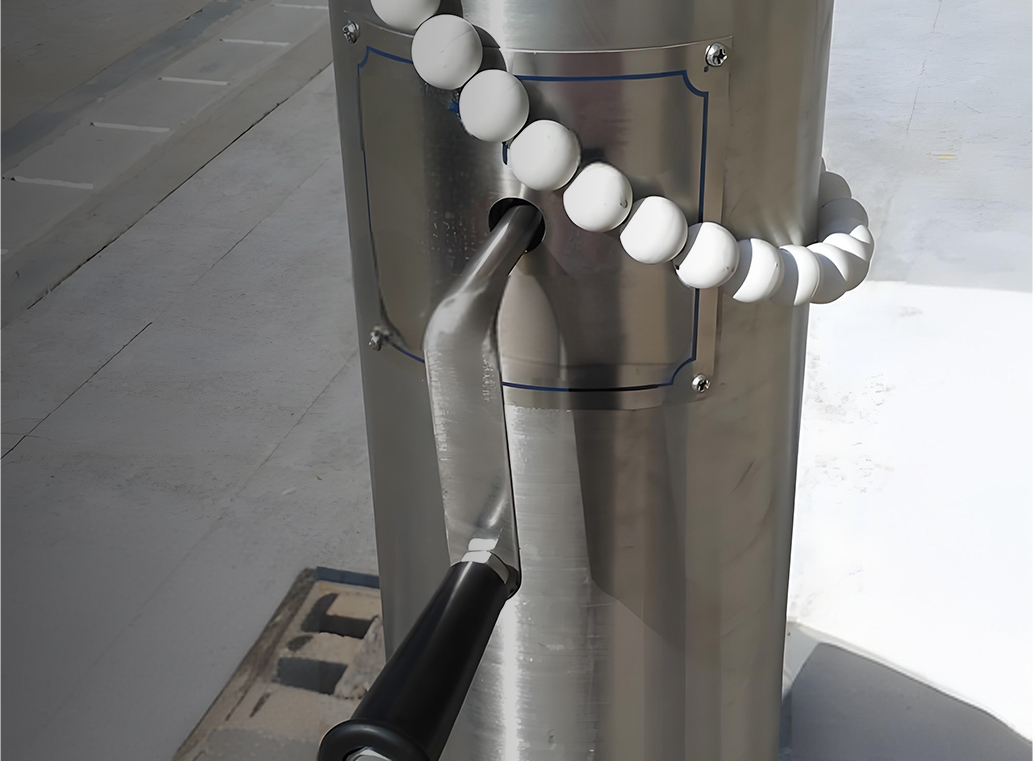

Flagpoles stand as proud symbols, gracing homes, businesses, and public spaces alike. While various materials are used in their construction, stainles......
READ MORESubmit feedback
Home / News / Industry News / How Tall Is a Flagpole? Practical Heights, Flag Ratios, and Sizing Rules
How Tall Is a Flagpole? Practical Heights, Flag Ratios, and Sizing Rules
Flagpole height is not one fixed industry number, but there is a dependable starting point. For most properties, the working range is 15 to 35 feet: 20 feet is the common residential height, 25 to 35 feet suits schools, businesses, and small municipal sites, and 40 to 60 feet or more appears on stadiums, plazas, and landmark installations. The final height is set by flag size, wind exposure, foundation design, viewing distance, and local code, not by curb appeal alone.
If you need a single number to begin a quote, start with 20 feet for a home under two stories, 25 to 30 feet for a school or business frontage, and 35 to 50 feet for a civic or sports venue. Then validate that number against the flag you intend to fly, the clear space around the pole, the wind load, and the permit requirements for the site. A flagpole that is too short looks undersized and can put the flag below the roofline; one that is too tall raises cost, foundation demand, and maintenance access without improving the display.
Common Flagpole Heights at a Glance
Height categories are useful because they connect a dimension to a real setting and a typical flag size. The table below is a planning guide, not a substitute for structural design or local approvals. A 30-foot pole on an exposed coastal site can carry a very different load from a 30-foot pole in a protected courtyard.
| Setting | Typical exposed height | Common flag size | What usually drives the choice |
|---|---|---|---|
| Wall-mounted or small display | 5 to 10 feet | 2.5 x 4 feet or 3 x 5 feet | Bracket clearance, facade proportions, and pedestrian clearance |
| Residential yard | 15 to 25 feet; 20 feet is most common | 3 x 5 feet or 4 x 6 feet | House height, setback, landscape sightlines, and HOA rules |
| Small business or retail frontage | 20 to 30 feet | 4 x 6 feet or 5 x 8 feet | Road visibility, facade height, and wind exposure |
| School, campus, or municipal building | 25 to 40 feet | 5 x 8 feet or 6 x 10 feet | Viewing distance, ceremony use, multiple flags, and code |
| Stadium, plaza, or large venue | 40 to 60 feet and above | 8 x 12 feet, 10 x 15 feet, or larger | Engineered pole, foundation, flag load, and access equipment |
| Monumental or landmark installation | 60 to 100 feet and above | Custom size | Structural engineering, permits, lighting, and maintenance planning |
The ranges overlap because a flagpole does not exist in isolation. A 25-foot pole in front of a two-story building may read clearly from the street, while a 25-foot pole beside a 40-foot tree line may disappear. The practical question is not “what is the standard height?” but “what height makes the flag visible, keeps it clear of obstructions, and keeps the structure within safe engineering limits?”
The Quarter Rule: Let the Flag Set the Height
A common display guideline is that the flag length should be roughly one-quarter of the exposed flagpole height. In other words, a 20-foot pole pairs with a flag about 5 feet long, which points to a 3 x 5-foot flag. A 30-foot pole pairs with a flag about 7.5 feet long, which is close to a 5 x 8-foot flag. The rule is a visual proportion guide, not a structural law, but it prevents the two most common mistakes: a large flag overwhelming a short pole and a small flag looking lost on a tall pole.
Use the following examples as a field check. A 15-foot pole usually suits a 3 x 5-foot flag in a compact yard. A 20-foot pole is the classic residential choice for a 3 x 5-foot flag and can handle a 4 x 6-foot flag if the site is protected. A 25-foot pole generally looks balanced with a 4 x 6-foot flag. A 30-foot pole is better matched to a 5 x 8-foot flag. A 35-foot pole can carry a 6 x 10-foot flag, and a 40-foot pole can move toward a 6 x 10 or 8 x 12-foot flag depending on wind exposure. Beyond 40 feet, flag size and pole engineering must be evaluated together.
Two adjustments matter. First, when two or three flags fly on one pole, reduce the individual flag size so the total flag area remains within the pole’s rated capacity. Second, in high-wind locations, a smaller flag on the same pole reduces load and flag wear. A flag that is correct for a protected courtyard may be too large for an open field, a rooftop, or a coastal site. The quarter rule gives you a starting ratio; the wind rating and the manufacturer’s load table give you the safe limit.
Site Context: What the Pole Must Clear and What It Must Be Seen From
Height decisions become much easier when you look at the site as a three-dimensional composition. The pole must clear buildings, trees, wires, and walkways, and it must be visible from the places that matter. A flag that is technically flying but blocked by a canopy or hidden behind a building does not serve its purpose.
Roofline, canopy, and backdrop
For residential and commercial sites, a useful target is to keep the top of the pole clearly above the nearby roofline or tree canopy when the flag is viewed from the street or main approach. That does not mean every pole must be taller than every building. It means the flag should have a clean backdrop and should not appear to sit on the roof. A 20-foot pole in front of a one-story house often works well; the same pole in front of a two-story house with mature trees may need 25 feet to remain legible.
Clearance for the flying flag
The flag extends downwind, so the clear zone is not just the pole footprint. Keep the fly end away from roof edges, signs, light fixtures, wires, and pedestrian paths. As a working check, allow a horizontal clear zone roughly equal to the flag length, plus a little margin. A 6 x 10-foot flag on a 35-foot pole can swing into a building if the pole is placed too close to a wall. The result is frayed flags, noisy hardware, and a display that looks cramped.
Viewing distance and scale
A flagpole should be sized for its typical viewing distance. At 30 to 50 feet, a 20-foot pole and a 3 x 5-foot flag are easy to read. At 150 to 300 feet, such as across a school driveway or a municipal lawn, a 25 to 35-foot pole with a 5 x 8 or 6 x 10-foot flag is more appropriate. At stadium or plaza scale, 40 to 60 feet is common because spectators may be hundreds of feet away. The further the audience, the more height and flag area are needed to create a clear silhouette.
Underground and overhead constraints
Before finalizing height, check for underground utilities, irrigation lines, drainage, and electrical conduits, especially if the pole will have lighting or an electric lifting system. Overhead lines, streetlights, and building projections also limit where the pole can stand. On tight urban sites, a slightly shorter pole in the right location often outperforms a taller pole in a poor location.
Wind, Material, and the Load a Tall Pole Carries
Wind load is the main reason flagpole height cannot be chosen from a picture book. The pole acts as a cantilever, and the flag adds a concentrated load near the top. Increasing the pole height increases the bending moment at the base, and increasing the flag area adds to that load. A 30-foot pole with a 5 x 8-foot flag in a sheltered courtyard is a different structure from a 30-foot pole with a 6 x 10-foot flag on an exposed ridge. This is why a responsible quote asks for location, wind speed, flag size, and whether the pole will carry one flag or several.
Aluminum is popular because it is light, corrosion-resistant, and easier to handle during installation. It suits many residential, commercial, and institutional poles, especially where a clean finish and lower shipping weight matter. Aluminum is not automatically “weak”; the wall thickness, alloy, diameter, and taper determine capacity. For a project that needs frequent lifting and a controlled display, an electric intelligent lifting conical flagpole can reduce manual handling and improve ceremony consistency.
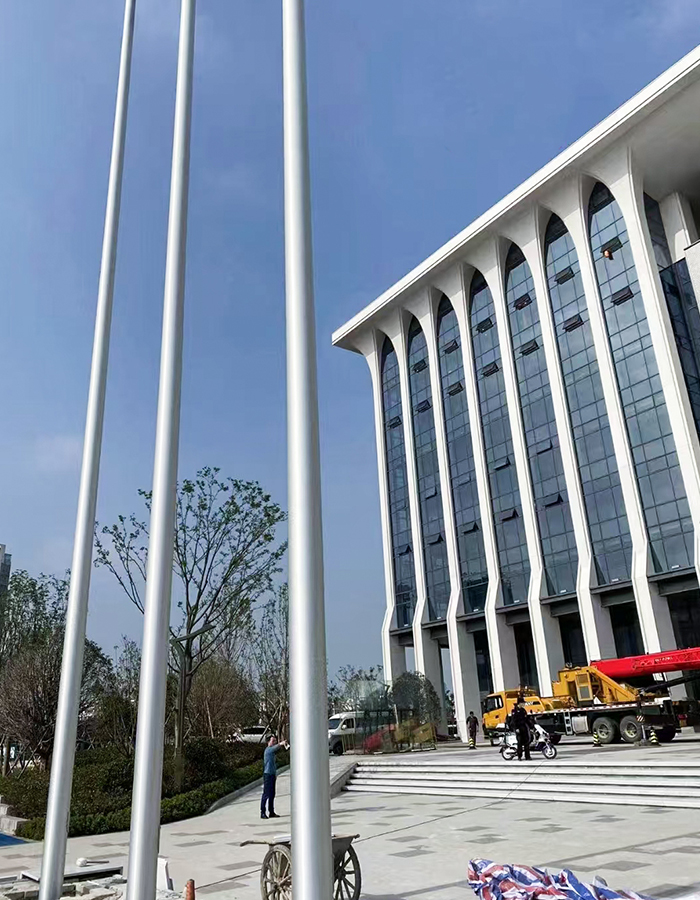 Aluminum Alloy Electric Intelligent Lifting Conical FlagpoleLightweight aluminum alloy paired with timed and remote-control lifting, offering controlled, consistent flag ceremonies for commercial and institutional sites.View Product →
Stainless steel brings higher strength and a different visual character. It is heavier, often more expensive, and requires proper base design, but it can be a good fit for larger poles, high-visibility civic sites, and installations where a premium metallic finish is desired. Stainless steel still needs the correct grade and maintenance routine, particularly near salt water or industrial atmospheres. A conical stainless steel intelligent electric lifting flagpole is a practical example of combining a durable pole body with controlled lifting for a public or institutional setting.
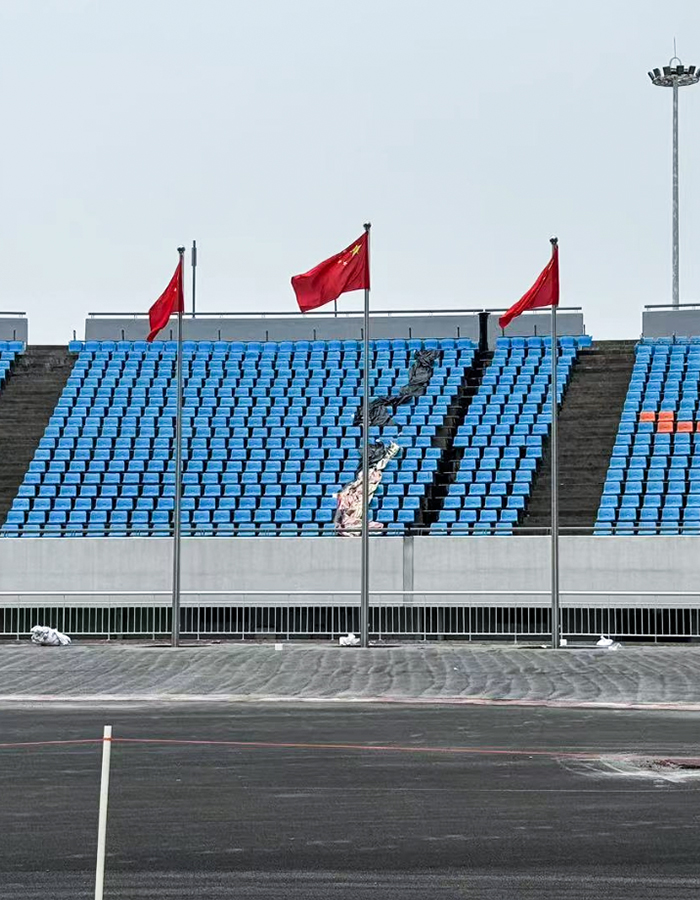 Conical Stainless Steel Intelligent Electric Lifting FlagpoleDurable stainless steel and intelligent timed or remote lifting suit high-profile civic and institutional settings where a formal, controlled ceremony matters.View Product →
Titanium is selected for corrosion resistance and premium performance, usually where lifecycle cost, coastal exposure, or a high-end architectural finish justifies the material cost. It is not the default choice for every project, and it should be specified with the same attention to wall thickness, foundation, and wind rating as any other pole. In a corrosive environment, a titanium corrosion-resistant hand-cranked conical lifting flagpole can be a sensible balance of durability and simple operation.
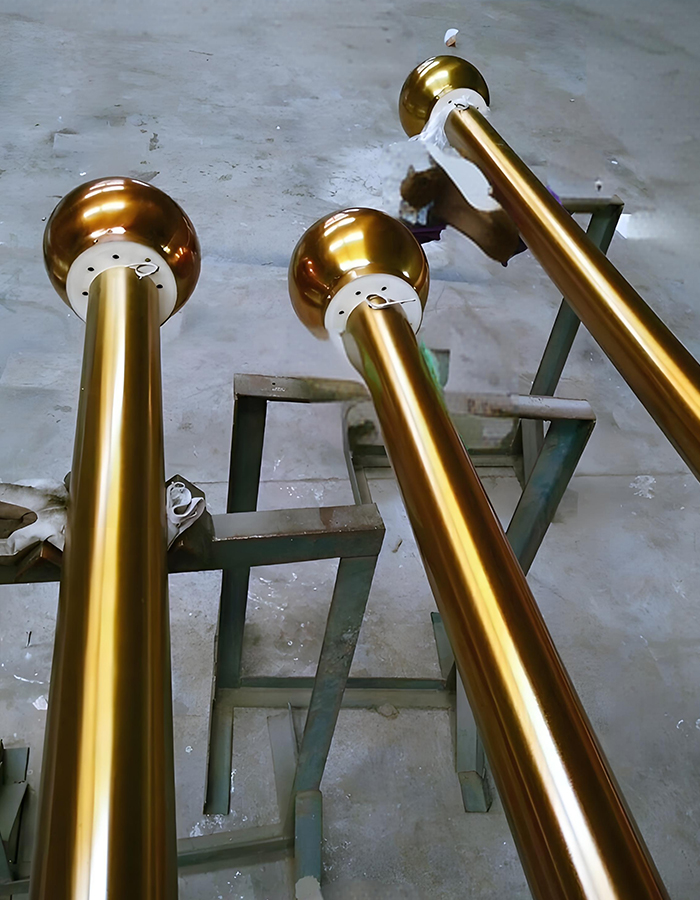 Titanium Corrosion-Resistant Hand-Cranked Conical Lifting FlagpoleTitanium construction and simple hand-cranked lifting provide corrosion resistance for premium coastal or formal sites with straightforward operation.View Product →
Material choice also affects height planning. A taller pole needs more stiffness and a larger foundation, and the difference between a 20-foot and a 40-foot pole is not simply double the hardware. The overturning moment at the base rises sharply with height and flag area. If a supplier quotes a 40-foot pole without asking about wind exposure and flag size, the quote is incomplete. If a site plan shows a tall pole but no foundation detail, the project has a hidden risk.
Halyard and Operation Choices That Change the Height Decision
The lifting method affects cost, maintenance, and how often the flag is actually used. An external halyard runs on the outside of the pole. It is straightforward to inspect and service, and it is often less expensive. The tradeoff is that the rope and hardware are exposed to weather and tampering. An internal halyard runs inside the pole, giving a cleaner appearance and better protection from wind and casual interference. It usually costs more and requires careful installation and maintenance access.
Manual hand-crank operation is reliable and does not require electrical power. It suits smaller poles, sites with infrequent flag changes, and locations where power is difficult to supply. Electric lifting is convenient for tall poles, frequent ceremonies, and institutions that want consistent positioning. It requires a power feed, controls, limit settings, and a manual override plan for power outages. The taller the pole, the more valuable a controlled lifting system becomes, because manual operation at height can be slow and less consistent.
Height also affects access. A 20-foot pole can often be serviced from a step ladder or a simple lift. A 40-foot pole may need a bucket truck, a tilt-down base, or a built-in winch system. A 60-foot pole requires a maintenance plan before installation, not after the first halyard failure. If the site cannot accommodate service equipment, a shorter pole or a different lifting system may be the better choice.
Foundation, Installation, and Code: The Hidden Height Constraints
The visible pole is only part of the structure. The foundation resists overturning and must be designed for the soil, frost depth, water table, wind speed, and flag load. A common planning rule is to embed roughly one-tenth to one-eighth of the exposed height, but that is only a starting point. A 20-foot residential pole may need a 3 to 4-foot footing in ordinary soil; a 30-foot pole may need 4 to 5 feet; a 50-foot pole should be engineered rather than guessed. Rocky soil, sandy soil, high water, and coastal exposure can change the design entirely.
Installation sequence matters. The hole must be located accurately, checked for utilities, and prepared with proper drainage. The base plate or sleeve must be level, the anchor bolts must be set to the correct projection, and the concrete must cure before the pole is loaded. Electrical conduits for lighting or lifting systems should be installed before the concrete is poured. If the pole is near a building, the foundation excavation must not undermine footings or drainage. If the site is on a slope, surface water must be directed away from the base.
Code requirements vary by jurisdiction. Local zoning may limit total height, setback from property lines, or the number of poles. Historic districts may impose design review. Sites near airports may trigger notice or marking requirements for tall structures. Building codes may require engineered drawings, wind-load calculations, and inspection. Homeowner associations may have their own height and flag rules. The practical lesson is to confirm the permitted height before ordering, not after the concrete is poured. A pole that is legal at 25 feet may require a variance at 35 feet, and the variance process can change the project schedule.
Matching Height to the Setting
Different settings reward different height choices. The following examples show how the same basic rule set produces different answers.
Residential yard
For a one- or two-story home, 20 feet is the most common starting point, with a 3 x 5-foot flag. If the house is tall, the setback is deep, or the pole must rise above a tree line, 25 feet may be better. If the yard is small or the association limits height, 15 feet can still work with a 3 x 5-foot flag, provided the pole is placed where the flag is visible from the street. Avoid placing a residential pole where the flag will strike the roof, a gutter, or a mature tree. A 4 x 6-foot flag on a 20-foot pole is acceptable in a protected site but can be too much in an open, windy yard.
School or campus
Schools often need a pole that reads from a driveway, a drop-off loop, or an athletic field. A 25 to 35-foot pole with a 5 x 8 or 6 x 10-foot flag is a practical range. If the pole carries the national flag and a school flag, go to the upper end of the range and reduce individual flag sizes so the total load remains acceptable. A 30-foot pole is a common compromise: tall enough for visibility, manageable for maintenance, and compatible with a range of foundations. If the flag is viewed from a stadium or a large lawn, 35 to 40 feet may be justified.
Business or municipal frontage
A business frontage often needs to be visible from a road while remaining proportional to the building. A 25 to 30-foot pole with a 5 x 8-foot flag is a sensible default. For a municipal building, courthouse, or public plaza, 30 to 40 feet with a 6 x 10-foot flag is common. At this scale, the project should include engineered drawings, a wind rating, and a maintenance plan. A 40-foot pole is not simply a larger residential pole; it is a public structure with different inspection and access requirements. If the site needs multiple flags, a taller pole may be necessary, but the flag area must still be controlled.
Stadium, plaza, and landmark
Large venues often use poles from 40 to 60 feet or more. At this height, the pole is usually part of a coordinated flag display, with multiple poles, lighting, and a formal ceremony plan. The engineering team must consider wind exposure, flag size, foundation design, and service access. A 60-foot pole may be appropriate for a stadium, but it is a poor fit for a small civic lawn unless the site has the clear space and maintenance resources to support it. Monumental poles above 60 feet are custom structures; they require detailed engineering and often aviation or zoning review.
Coastal and high-wind sites
Coastal sites combine salt exposure with stronger, more persistent wind. A shorter pole with a smaller flag can outperform a taller pole that is constantly overloaded. If the display requires height, specify corrosion-resistant materials, robust hardware, and a foundation designed for the local wind speed. Titanium or high-grade stainless steel may be appropriate, but material alone does not solve a wind-load problem. The flag size and pole capacity must be matched to the site.
Procurement Checks Before You Order
Flagpole pricing is easy to compare and easy to misread. A low quote may exclude the foundation, freight, installation, lifting system, or flag. Before approving a purchase, check the technical basis of the offer. The supplier should know the exposed height, the flag size, the wind exposure, and the installation method. If those details are missing, the height decision is not finished.
- Confirm the exposed height above grade, not the shipped length. A 25-foot pole may arrive in sections and may have a different above-grade height after installation.
- State the flag size and number of flags. A pole rated for one 4 x 6-foot flag may not be suitable for two 6 x 10-foot flags.
- Ask for the design wind speed and the load basis. The answer should match the project location, not a generic brochure value.
- Clarify the foundation scope. Who designs it, who supplies the anchor bolts, and who inspects the excavation?
- Check the lifting method and power requirements. Electric systems need a power source, controls, and a manual override plan.
- Confirm finish, material grade, and corrosion protection for the actual environment.
- Ask about maintenance access. A tall pole with no service plan is a future problem.
- Verify permits, setbacks, and any airport, historic, or HOA restrictions before fabrication.
It also helps to compare the whole assembly rather than the pole alone. Review the outdoor flagpole range by material and lifting method, then match the selected pole to the site conditions. A 20-foot residential pole and a 40-foot municipal pole may look similar in a catalog, but they belong to different engineering categories.
Maintenance, Longevity, and When Height Becomes a Liability
Every additional foot of height increases the need for inspection. Halyards wear, pulleys seize, flags fray, and anchor bolts can loosen. Taller poles are more exposed to wind-driven rain and salt, and they are harder to inspect without equipment. A practical maintenance program includes checking the halyard and connections, looking for corrosion at the base and fittings, confirming that the foundation drains freely, and replacing worn flags before they tear. A flag that whips in the wind can damage itself and accelerate hardware wear.
For aluminum poles, the aluminum flagpole maintenance process should include regular cleaning and inspection of the finish, especially in coastal or industrial environments. Stainless and titanium poles still need inspections; corrosion resistance is not the same as maintenance-free performance. The base, welds, and lifting mechanism deserve attention regardless of material.
Height becomes a liability when it is chosen without a service plan. A pole that requires a crane for every minor adjustment may be used less often than intended. A pole that is taller than the site needs may attract unnecessary permit scrutiny and wind exposure. The best height is the shortest pole that satisfies visibility, flag proportion, ceremony needs, and code, with enough margin for safe operation.
A Practical Sizing Sequence
Use this sequence to move from a rough idea to a defensible height:
- Define the display. Will the pole fly one flag, two flags, or a ceremonial set? Record the intended flag dimensions.
- Choose a starting height from the use category: about 20 feet for a home, 25 to 35 feet for a school or business, 35 to 50 feet for a civic or sports venue, and custom engineering above that.
- Apply the quarter rule. Adjust the flag size or the pole height until the flag reads correctly and stays within the pole’s rated capacity.
- Check the site. Confirm clearance from buildings, trees, wires, and walkways, and verify that the pole will be visible from the main viewing point.
- Confirm wind exposure and material. Select aluminum, stainless steel, or titanium with the required wall thickness, finish, and lifting method.
- Design the foundation and installation. Use local soil, frost, drainage, and wind data; do not rely on a generic hole depth.
- Verify permits and code. Check height limits, setbacks, historic rules, airport notice requirements, and association restrictions.
- Plan maintenance. Confirm how the halyard, lifting system, and flag will be serviced at the selected height.
The bottom line is straightforward: most flagpoles are between 15 and 35 feet tall, with 20 feet common for homes and 25 to 35 feet common for schools, businesses, and municipal sites. Larger venues move into the 40 to 60-foot range and beyond, where engineering and maintenance planning become central. A good height is not the tallest option or the cheapest option; it is the one that makes the flag visible, keeps the structure safe, and allows the owner to maintain it without difficulty.
Previous Post
No previous article
Next Post
Flagpole on a House: Practical Mounting, Wind Load, and Maintenance Guide
News
-
-
1. Understanding the Importance of Regular Maintenance for Aluminum Alloy Flagpoles Regular maintenance of your aluminum alloy flagpole is essential ......
READ MORE -
Unique advantages of aluminum alloy: Why it is the preferred material for flagpoles In today's society, flagpoles are not only a tool for displaying f......
READ MORE -
What is the aluminum alloy electric intelligent lifting conical flagpole? The aluminum alloy electric intelligent lifting conical flagpole is a high-e......
READ MORE

Copyright Jiangsu Shengqi Weiye Intelligent Technology Co., Ltd. All Rights Reserved.
 Custom Commercial Flagpoles Suppliers