
 English
 русский
 عربى
عربى






Flagpoles stand as proud symbols, gracing homes, businesses, and public spaces alike. While various materials are used in their construction, stainles......
READ MORESubmit feedback
Home / News / Industry News / What Size Flag for a 30 Foot Flagpole? The Complete Sizing Guide and Chart?
What Size Flag for a 30 Foot Flagpole? The Complete Sizing Guide and Chart?
The Short Answer: Use a 5x8 Flag on a 30-Foot Pole
For a 30-foot in-ground flagpole, the correct flag size is 5x8 feet as the standard choice. A 6x10 foot flag is the largest reasonable option and should be considered only when the pole is structurally rated for it, the site has relatively low wind exposure, and you specifically need maximum visibility. For the majority of homes, schools, small businesses, and civic sites, a 5x8 flag is what you should order.
The reasoning comes from how a flag behaves in the wind. The long side of the flag, called the fly, is the dimension that determines how much area the wind can push. A 5x8 flag has an 8-foot fly, while a 6x10 flag has a 10-foot fly. Industry sizing charts consistently list 5x8 as the recommended pairing for a 30-foot pole and 6x10 as the upper limit. The difference between the two sizes is not cosmetic; it changes the load on the pole, the wear on the fabric, and the life of the entire installation.
Using a flag that is too large for a 30-foot pole produces predictable failures. The flag snaps and whips more violently, seams open up at the corners, grommets pull through the header, the halyard frays, the truck and ball head see extra stress, and the pole can sway noticeably in strong gusts. Over time, an oversized flag can even work the foundation loose. A flag that is too small, on the other hand, looks lost on a 30-foot pole and cannot be read from any distance. The right size is a compromise between presence and wind exposure, which is exactly what the 5x8 standard represents.
The 1/4-1/3 Ratio and the Math Behind It
The most widely accepted rule in the flag industry is that the fly of the flag should be between one quarter and one third of the exposed height of the pole. Before applying the rule, it helps to define the two flag dimensions. The hoist is the vertical edge closest to the pole. The fly is the horizontal edge that trails away from the pole. When a flag is described as 5x8, the first number is the hoist and the second number is the fly.
Calculating the Correct Fly Length for a 30-Foot Pole
For a 30-foot pole, the calculation is straightforward. One quarter of 30 feet is 7.5 feet. One third of 30 feet is 10 feet. The fly should therefore measure between 7.5 and 10 feet. A 5x8 flag has a fly of 8 feet, which sits comfortably inside that range at roughly 27 percent of the pole height. A 6x10 flag has a fly of 10 feet, which lands exactly at the upper limit and represents 33 percent of the pole height.
This ratio range exists instead of a single number because conditions vary from site to site. A pole in a sheltered courtyard can handle a larger flag without distress, while the same pole on an open hill cannot. Flag makers also use the rule to protect their products. When a flag is oversized relative to the pole, the fabric moves too aggressively and fails at the seams long before it should. Most warranty claims trace back to flags that were technically within a chart but wrong for the actual site.
This is why you will see one chart recommend 5x8 for a 30-foot pole and another chart list 6x10. They are describing opposite ends of the acceptable range. The practical choice for most owners is the smaller end of the range, because it is easier on hardware, less expensive to replace, and far more tolerant of unexpected wind. Reserve 6x10 for locations where wind is regularly calm and the flag needs to be seen across a large open area.
Where a 30-Foot Pole Fits Between Residential and Commercial
A 30-foot flagpole sits in a transition zone. Typical residential poles are 15, 20, or 25 feet and fly flags sized from 3x5 to 5x8. A 30-foot pole is common at subdivision entrances, larger country properties, school campuses, small municipal buildings, car dealerships, hotels, places of worship, and memorial sites. It is tall enough to feel significant but does not require the heavy foundation and commercial rigging of a 40-to-60-foot pole.
This middle position causes a specific problem: people treat a 30-foot pole with habits learned from shorter poles. A homeowner moving from a 20-foot pole may keep using a 3x5 flag, and the result looks small and temporary. A business owner, by contrast, often overcorrects and installs a large flag such as a 6x10 in an exposed parking lot, only to find the pole swaying and the flag shredded within one season. The correct starting point for both is 5x8, with 6x10 used only for sites that genuinely qualify.
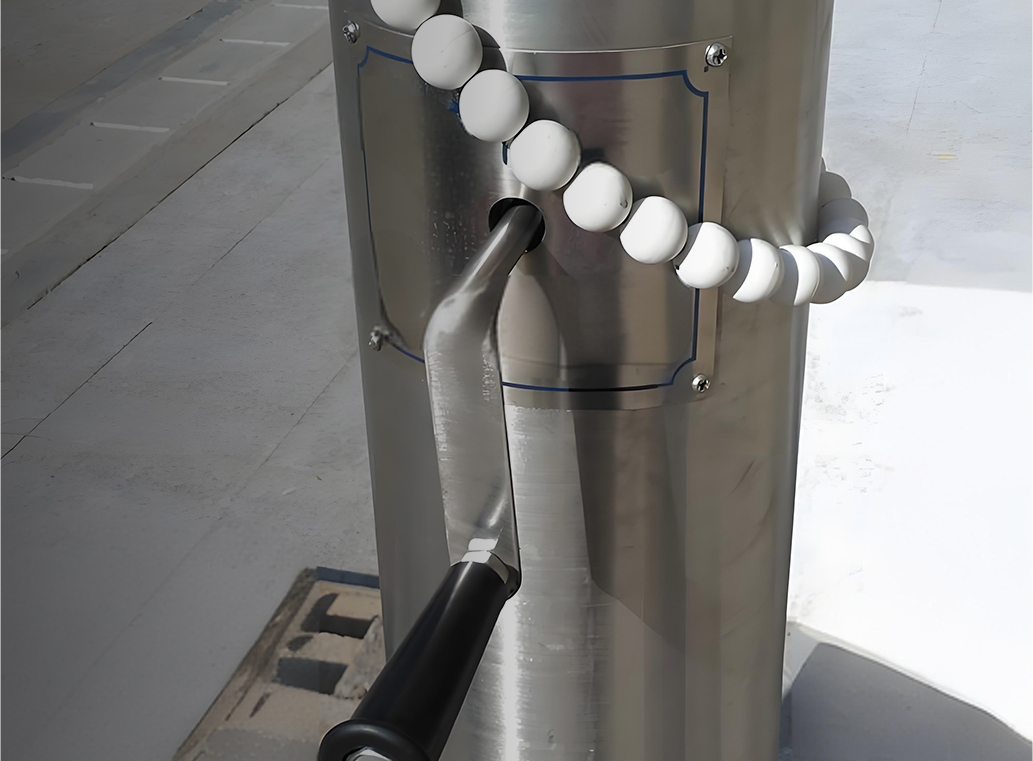
If you are buying a new pole rather than only selecting a flag, the better approach is to choose the pole based on the flag you intend to fly. A 30-foot pole with light wall thickness and minimal taper is not suitable for a 6x10 flag in open terrain. When the pole and flag come from the same engineering perspective, the risk disappears. For this height class, an outdoor aluminum alloy conical hand-cranked lifting flagpole is a common and practical configuration, because the hand-crank mechanism makes it easy to lower the flag in severe weather, which is one of the simplest ways to extend the life of both the flag and the pole.
 OEM/ODM Outdoor aluminum alloy conical hand-cranked lifting flagpole Suppliers, Jiangsu Shengqi Weiye Intelligent Technology Co., Ltd. is China OEM/ODM Outdoor aluminum alloy conical hand-cranked lifting flagpole supp...View Product →
Reference Flag Size Chart for Common Pole Heights
The chart below shows the standard flag sizes that most flag manufacturers and flagpole suppliers recommend for common in-ground pole heights. Use the chart as a starting point, not as a substitute for evaluating your own wind conditions and pole specifications.
| Flagpole Height | Standard Flag Size | Optional Maximum Size |
|---|---|---|
| 15 ft | 3x5 ft | 4x6 ft |
| 20 ft | 3x5 ft | 4x6 ft |
| 25 ft | 4x6 ft | 5x8 ft |
| 30 ft | 5x8 ft | 6x10 ft |
| 35 ft | 5x8 ft | 6x10 ft |
| 40 ft | 6x10 ft | 8x12 ft |
| 50 ft | 8x12 ft | 10x15 ft |
| 60 ft | 10x15 ft | 12x18 ft |
Reading the row for 30 feet tells you the complete story. The standard recommendation is a 5x8 flag, and the optional maximum is 6x10 for low-wind sites. Most flag manufacturers will not recommend anything larger than 6x10 on a 30-foot pole, and several list only 5x8. If a supplier suggests a non-standard size such as 5x9 or 6x8, there is usually no benefit to accepting it, because you will pay more for a custom cut and have a harder time finding replacements later.
How Flag Material and Construction Affect the Right Size
A flag's dimensions only tell you its area. Its weight and behavior come from the fabric, and two flags with identical dimensions can be completely different products in real wind. Choosing the right size for a 30-foot pole therefore requires asking a second question: what material is the flag made of, and how well is it built?
Nylon Is the Standard for Most 30-Foot Installations
Nylon is the default outdoor flag fabric for good reason. It is lightweight, holds dye well, moves in a light breeze, dries quickly after rain, and resists mildew. A 5x8 nylon flag is the standard professional-grade pairing for a 30-foot pole in areas with ordinary wind. The weight stays low enough that the halyard, truck, and pole do not see excessive loads, while the flag still has enough area to be clearly legible from a reasonable distance.
Polyester Is Heavier and Belongs on High-Wind or High-Duty Sites
Polyester flags are made with a heavier, denser weave and are built for continuous outdoor exposure and stronger wind. The added weight is both the benefit and the cost. A polyester 5x8 flag can weigh meaningfully more than a nylon 5x8 flag, and a polyester 6x10 may exceed what a typical 30-foot pole should carry even though the dimensions are acceptable on paper. If you need a durable flag for a site with regular wind, keep the size at 5x8 and choose polyester, rather than increasing the size and keeping nylon.
Cotton and Specialty Fabrics
Cotton is traditional and has a rich appearance, but it absorbs water, becomes heavy when wet, and fades quickly. It is rarely the right material for a tall outdoor pole. Specialty fabrics exist for extreme conditions, but for a single 30-foot pole, a good nylon or polyester product is almost always the more sensible investment.
Construction quality matters as much as the fabric type. A well-made flag has double-stitched seams, reinforced corners, brass or stainless grommets, a canvas header, and reinforced stitching along the fly edge. A poorly made flag fails at these points regardless of size. In practice, a quality 5x8 nylon flag will outlast a cheap 6x10 polyester flag by a wide margin, which is another reason the smaller standard size is usually the better purchase.
Wind Load, Pole Strength, and the Role of Pole Material
The largest factor in flag sizing is wind, because the force on a flag increases in proportion to its area and roughly with the square of the wind speed. A 6x10 flag in a 30 mph gust carries a significantly heavier load than a 5x8 flag in a 20 mph breeze. On a 30-foot pole, that extra load does not disappear; it is transferred into the halyard, the truck, the pole shaft, and the foundation.
A pole's ability to handle that load depends on wall thickness, taper, material, and the quality of its welds and base connection. Two 30-foot poles from different manufacturers can have very different capacities. If you want the 6x10 option, ask for the pole's specification sheet and confirm that the manufacturer states a maximum recommended flag size. This is not a minor detail. A pole that is rated for 80 mph with a 5x8 flag may only be rated for a 6x10 flag in much calmer conditions, and no chart can replace that specific engineering data.
The material of the pole also changes how safely it performs in the environment. Aluminum alloy poles are lightweight and corrosion-resistant, which makes them the most common choice for general outdoor use. Stainless steel poles are stronger and stiffer, useful for high-use commercial sites where the pole is expected to stand for decades. Titanium alloy poles are the best choice for corrosive coastal environments, where salt air attacks aluminum and standard steel. If your site is near the ocean, a titanium corrosion-resistant hand-cranked conical lifting flagpole avoids the pitting and degradation that shortens the life of other materials, while the flag sizing logic stays exactly the same.
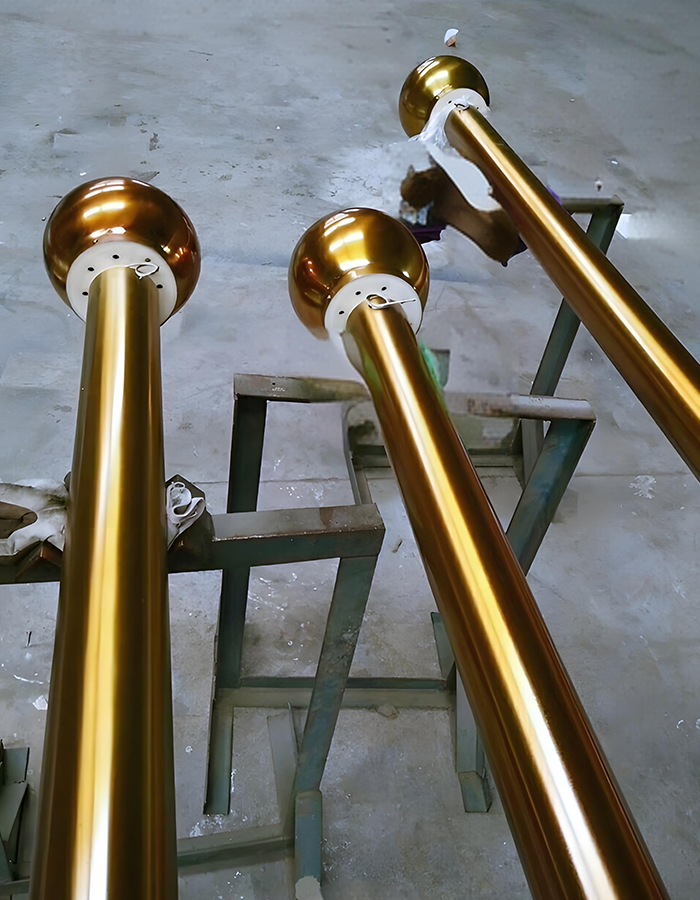 OEM/ODM Titanium corrosion-resistant hand-cranked conical lifting flagpole SupplJiangsu Shengqi Weiye Intelligent Technology Co., Ltd. is China OEM/ODM Titanium corrosion-resistant hand-cranked conical lifting flagpol...View Product →
For commercial and institutional buyers, stainless steel is a frequent choice for 30-foot poles in front of public buildings and businesses because it combines strength, appearance, and long service life. The selection process between aluminum, stainless steel, and titanium includes considerations that go beyond the flag chart, which is why a full stainless steel flagpole guide is worth reading before you finalize the order. Whatever material you choose, never exceed the manufacturer's stated flag area for that specific pole model.
Site Conditions, Visibility, and Local Requirements
The 5x8 versus 6x10 decision should be made after a quick walk around the site. Look at what surrounds the pole. An open field with no trees or buildings exposes the flag to full wind. A courtyard, a street lined with buildings, or a spot behind a windbreak shelters the flag and allows a larger size. Most flag damage happens on exposed sites, so when in doubt, choose the smaller size.
Visibility is the second consideration. A 5x8 flag is legible from roughly 100 to 150 feet away. A 6x10 flag extends that reading distance by perhaps 50 feet. If the flag is meant to identify a business or a property from a nearby road, 5x8 is almost always enough. If the flag must be recognized across a wide parking lot, a sports field, or a large entry plaza, the larger flag may be justified. Just make sure the structural capacity is there before you trade durability for visibility.
Aesthetic proportion matters more than most owners expect. Architects and experienced installers agree that a 5x8 flag looks proportionally correct on a 30-foot pole. A 6x10 can look heavy in a residential context, and a 3x5 or 4x6 looks undersized. The flag should read as an intentional part of the building or landscape, not as an afterthought.
There are two additional constraints to check. If you fly the flag around the clock, it must be illuminated at night, and a larger flag needs more light to stay visible. Also, some municipalities, homeowners associations, and commercial lease agreements regulate flagpole height or flag size. Confirm the local rules before committing to an oversized flag, because a code violation is not solved by a better flag.
Multiple Flags, Ceremonial Use, and Automated Lifting
A 30-foot pole is often asked to fly more than one flag. When two flags share a pole, the senior flag, usually the national flag, goes at the top and in the larger size. The secondary flag flies below and should be noticeably smaller. For a 30-foot pole with a 5x8 primary flag, a 3x5 or 4x6 secondary flag is the common arrangement. The total wind load increases when two flags fly, so do not combine a 6x10 primary with a full-size secondary; the combined area will stress the hardware.
If the pole serves an event venue, a school, or a government site where the flag is raised and lowered daily, an automated lifting system changes the daily experience and protects the investment. The conical stainless steel intelligent electric lifting flagpole is a typical configuration for this duty, with a motorized internal halyard and remote control that brings the flag down smoothly in a few seconds. When severe weather approaches, the operator can lower the flag immediately instead of wrestling with a hand crank. The flag sizing rule does not change with the lifting system, but a motorized pole encourages more frequent lowering, which extends flag life.
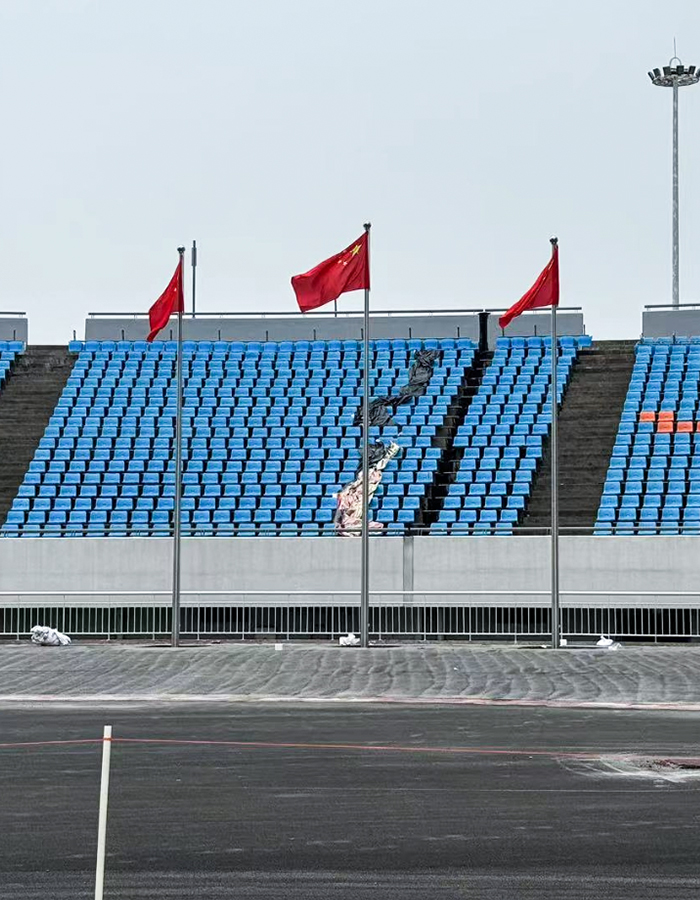 OEM/ODM Conical stainless steel intelligent electric lifting flagpole Suppliers,Jiangsu Shengqi Weiye Intelligent Technology Co., Ltd. is China OEM/ODM Conical stainless steel intelligent electric lifting flagpole sup...View Product →
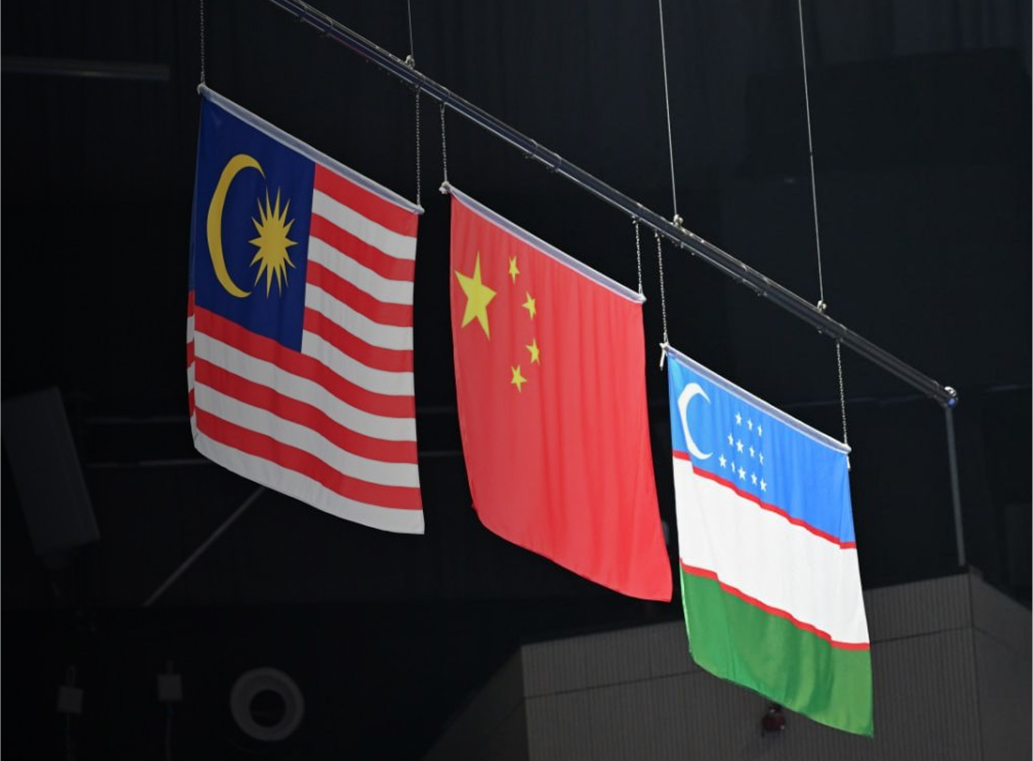
Ceremonial situations have their own equipment category. Horizontal award flagpoles, used to display national or team flags during award ceremonies on the field or podium, are not sized by the 1/4-to-1/3 rule. They are sized by the height of the display space and the dimensions of the flags being shown. Do not apply the outdoor 30-foot chart to an indoor or horizontal display. The same distinction applies to indoor flagpoles, which are chosen for ceiling height and room proportions rather than wind load.
Hardware, Installation, and Maintenance That Affect Flag Life
The flag size you choose determines how strong the rest of the system must be. A 6x10 flag requires a heavier halyard, stronger snap hooks, and a more robust truck than a 5x8 flag. If you are upgrading an existing pole from 5x8 to 6x10, replace the halyard and inspect the truck at the same time. A halyard that is too thin will stretch and fray under the larger load, and a worn truck will fail at the worst possible moment.
The top of the pole deserves specific attention. A downwind rotating ball head allows the flag and halyard to rotate with the wind instead of wrapping around the pole, which is especially important in gusty or shifting wind. This accessory is inexpensive compared with the cost of replacing a tangled halyard or a bent pole. For a 30-foot pole flying a 5x8 or 6x10 flag, a rotating ball head should be considered standard equipment.
The foundation is also part of the sizing equation. A 30-foot in-ground pole normally sits in a concrete foundation that resists overturning. A larger flag increases the lateral force on the pole, which means the foundation must be large enough to hold against that force. If the pole already exists and the foundation was designed for a 5x8 flag, switching to a 6x10 flag should prompt a structural check rather than a simple swap.
Maintenance follows a simple rhythm. A flag flying outdoors every day takes constant UV and mechanical abuse. Inspect the flag monthly for seam separation, frayed edges, and worn grommets. Most flags should be replaced every few months under full-time outdoor use, and keeping a spare flag on hand is cheaper than running a worn flag until it fails. The pole itself needs seasonal attention: clean aluminum alloy surfaces, inspect welds and anchor bolts on steel poles, lubricate the halyard, and confirm the ball head spins freely. The full routine is well documented in the aluminum alloy flagpole maintenance process, which covers the steps that keep a 30-foot installation safe and presentable.
A larger flag also creates more handling work. If a pole requires a ladder or a long pole to reach the snap hooks, lowering a 6x10 flag in a storm is more difficult than lowering a 5x8 flag. The easier the flag is to handle, the more likely it will be lowered in bad weather, and the longer it will last.
Six Common Mistakes When Sizing a Flag for a 30-Foot Pole
After years of manufacturing flagpoles and watching how they are used, a clear set of avoidable mistakes stands out. These are the decisions that shorten flag life, damage poles, and create unnecessary cost.
- Choosing 6x10 just for visual impact without checking wind exposure. This is the most common cause of early flag failure and pole damage on this height class.
- Reusing a 3x5 or 4x6 flag from a shorter pole. On a 30-foot pole these sizes look undersized and do not represent the property well.
- Ignoring fabric weight. A heavyweight polyester 6x10 can overload a pole even when the size is technically allowed.
- Treating wall-mounted and in-ground poles the same. Wall-mounted poles experience different forces and often need a smaller flag than the chart suggests for a pole of the same height.
- Buying the pole and flag separately without a specification sheet. If no one provides a wind rating, no one is accountable for the combination.
- Letting a flag fly past its useful life. A faded and torn 6x10 looks worse than a fresh 5x8, and the larger flag costs more to replace.
Buy the Pole and the Flag as One System
A 30-foot flagpole is a small structural installation, and the flag is not a decorative afterthought; it is the aerodynamic load that the pole, halyard, truck, and foundation are built to manage. The most reliable way to get the sizing right is to select the pole and the flag together, based on the same engineering data, rather than buying a pole from one source and guessing at the flag afterward.
That is the value of working with a factory-direct flagpole manufacturer that builds flagpoles as its core business. Jiangsu Shengqi Weiye Intelligent Technology Co., Ltd., operating as bestflagpole.com, has nearly 20 years of experience in flagpole design and manufacturing, in-house production across an 8,000-square-meter facility, and certifications including ISO9001, ISO14001, and OHSAS18001. Its product range covers aluminum alloy, stainless steel, and titanium alloy conical poles, hand-crank and electric lifting systems, award and indoor poles, and the accessories that make an installation complete. Because the company ships more than 50 flagpoles per day, the sizes it recommends are validated across thousands of real installations rather than drawn from a generic chart.
If you are replacing a flag on an existing 30-foot pole, the conclusion is simple. Start with a 5x8 nylon flag of good quality. Upgrade to a 6x10 only if the pole specification permits it, the site is sheltered, and the flag must be visible from a greater distance. And if you are planning a new installation, specify the flag you intend to fly first, then select a pole that is engineered for that flag. The right starting point is to check the manufacturer's maximum flag specification on the specific pole model before you commit.
The answer to the question is therefore 5x8 for almost every 30-foot pole, with 6x10 as a conditional maximum for low-wind sites with adequate structural capacity. Respect the 1/4-to-1/3 range, watch the wind, buy quality fabric, and keep the hardware in good condition. A correctly sized flag will look better, fly better, and last far longer than an oversized one, and that is the outcome every property owner actually wants.
Previous Post
How to Lower a Flag on a Flagpole: Step-by-Step Guide for Safe Lowering
Next Post
How Tall Flagpoles Actually Are?
News
-
-
1. Understanding the Importance of Regular Maintenance for Aluminum Alloy Flagpoles Regular maintenance of your aluminum alloy flagpole is essential ......
READ MORE -
Unique advantages of aluminum alloy: Why it is the preferred material for flagpoles In today's society, flagpoles are not only a tool for displaying f......
READ MORE -
What is the aluminum alloy electric intelligent lifting conical flagpole? The aluminum alloy electric intelligent lifting conical flagpole is a high-e......
READ MORE

Copyright Jiangsu Shengqi Weiye Intelligent Technology Co., Ltd. All Rights Reserved.
 Custom Commercial Flagpoles Suppliers