
 English
 русский
 عربى
عربى


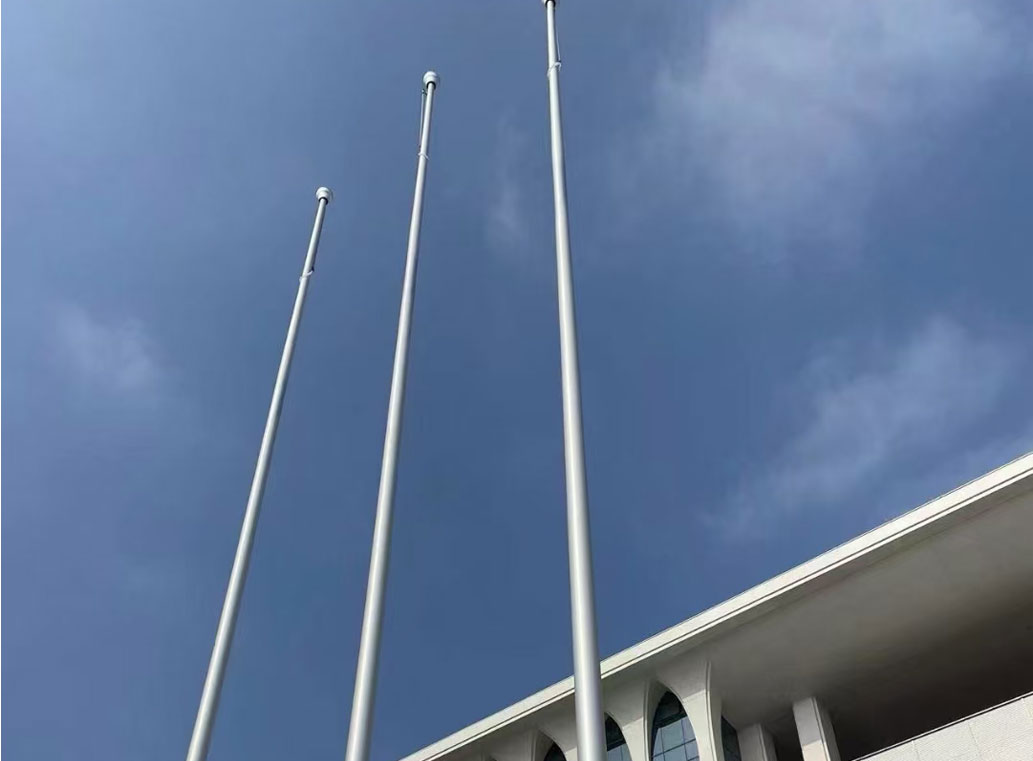
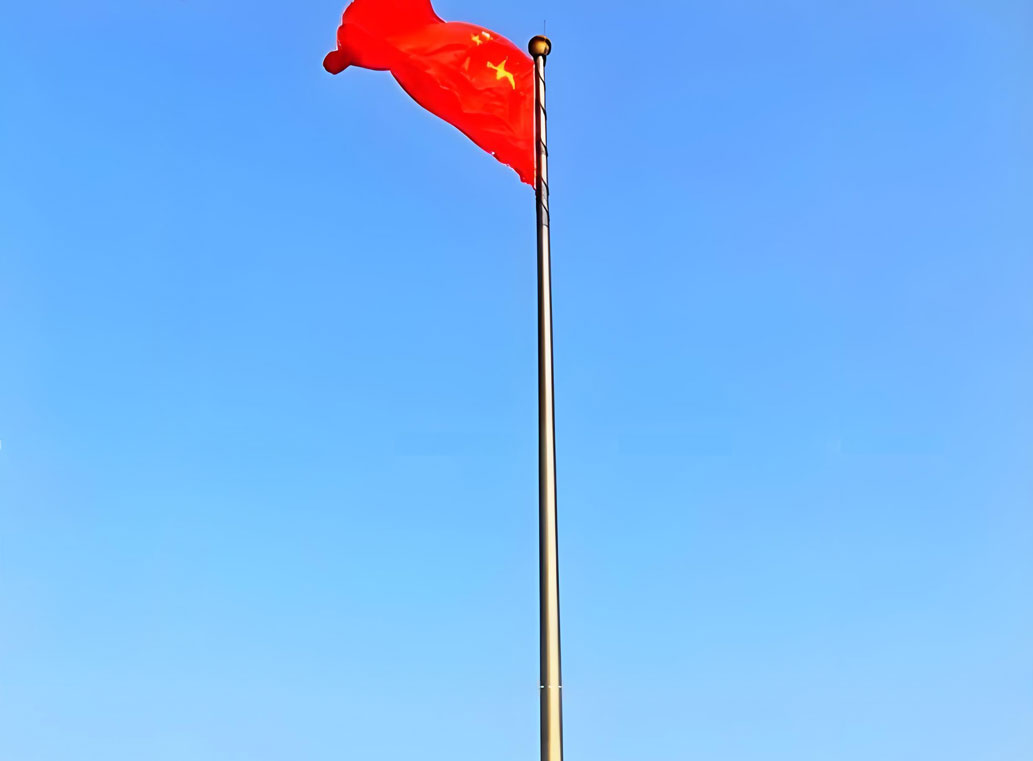


Flagpoles stand as proud symbols, gracing homes, businesses, and public spaces alike. While various materials are used in their construction, stainles......
READ MORESubmit feedback
Home / News / Industry News / What Is a Flagpole? Definition, Types, Parts, Materials, Heights and Buying Guide
What Is a Flagpole? Definition, Types, Parts, Materials, Heights and Buying Guide
A 30-foot metal pole holding a national flag looks like one of the simplest products a manufacturer can build. In reality, it is a precisely tapered column, a lifting mechanism, a set of wind-loaded accessories, and a below-grade foundation engineered to work as a single system. Ask ten people what a flagpole is, and most will answer, "a pole that holds a flag." That answer is correct but incomplete. A flagpole is a purpose-built structure that must raise, display, and secure a flag in all weather conditions for decades, without bending, rusting through, tangling the flag, or failing at the welds. This guide explains what a flagpole really is: the parts, the materials, the dimensions, the engineering decisions, and the buying factors that matter when you are the one specifying it.
The Working Definition of a Flagpole
A flagpole, also called a flagstaff, a flagmast, or simply a staff, is a vertical support structure designed specifically to display one or more flags at height. The dictionary definition is easy to memorize, but in real projects a flagpole has to do four things simultaneously:
- Lift a flag to a height where it is visible from the surrounding area.
- Allow the flag to be raised, lowered, and replaced easily and safely.
- Keep the flag from wrapping around the pole as much as reasonably possible.
- Stay structurally sound under the wind loads that the flag and the shaft create.
A decorative pole that fails any of those four tests is not a flagpole in the working sense of the term. It is a sculpture that happens to have a flag attached to it. This distinction matters enormously to buyers. A residential pole is a simple product: a 15-to-20-foot aluminum tube, a length of rope, and a cleat. A commercial flagpole is a different category. It is rated against design wind speeds, built with a tapered shaft so that bending stress is distributed correctly, anchored in a concrete footing sized by a structural engineer, and usually equipped with an internal halyard or a powered lifting mechanism for cleanliness and security. It also comes with documented load ratings that an architect, project manager, or inspector can verify.
When people search for what a flagpole is, they usually want more than a one-line definition. They want to know what separates a good flagpole from a bad one, how the parts work together, and why two poles of the same height can have wildly different prices. The following sections answer those questions from the ground up.
The Anatomy of a Flagpole: Components and Functions
Every flagpole, regardless of brand, material, or price range, contains the same six functional systems. Once you know them, you can read any manufacturer's specification sheet and identify where the budget is being spent and where corners might be cut.
Foundation and Ground Sleeve
The foundation is the part of a flagpole that nobody photographs, and it is also the part that keeps the pole vertical. The ground sleeve, usually made of galvanized steel or aluminum, is cast into a concrete footing below grade. The shaft is then lowered into the sleeve so that it can be plumbed, secured, and, if necessary, lifted out years later without excavating the ground. Some commercial poles use a hinged base instead of a sleeve, allowing the entire shaft to be hinged down to ground level for maintenance, which is a practical feature for tall poles in confined spaces.
The concrete block has to resist both the vertical weight of the pole and the overturning moment created by wind pushing on the shaft and the flag. As a practical guideline, a 20-foot pole typically sits in a footing about 2 feet square and 3 to 4 feet deep. A 40-foot pole may need a footing 4 feet square and 5 to 6 feet deep. Local wind zone, soil conditions, and flag area all change the numbers. The sleeve protrudes a few inches above finished grade, where an aluminum base cover or collar closes the gap and gives the installation a finished appearance. Proper drainage around the base is essential; a pole standing in pooled water will corrode far faster than the same pole installed on dry, well-drained ground.
Shaft
The shaft is the main structural body: a tapered, continuous-looking column in most commercial designs. Tapering does two jobs. It reduces the cross-section as wind speed increases toward the top, and it creates the sleek profile that people associate with a professional flagpole. A typical 30-foot aluminum pole has a base diameter of about 5 to 6 inches (127 to 152 mm) and a top diameter of about 3.5 to 4 inches (89 to 102 mm), meaning the top is roughly 60 to 70 percent of the base diameter. Wall thickness starts near 0.1 inch (2.5 mm) on smaller poles and increases to 0.25 inches (6 mm) or more on 80-foot installations.
Shafts may be a single continuous tube or built from two or more sections joined by flanges, depending on transport constraints and total height. The interior of the shaft is never empty on a commercial pole: internal halyard systems route the lifting rope through it, and the base contains the winch, crank, or cleat assembly behind a locked access door. Straightness and wall thickness consistency are the two manufacturing parameters that most affect long-term performance, and both should be confirmed on the datasheet rather than assumed.
Truck and Pulley Assembly
At the top of the shaft sits the truck, a cap or housing that contains the sheave, which is the pulley over which the halyard runs. In an external halyard system, the truck is a relatively simple crown with a pulley; the rope runs up the outside of the pole, over the sheave, and down to the flag. In an internal halyard system, the rope is pulled up through the hollow shaft, exits through the truck, and returns to the flag side. Truck materials must match or outlast the shaft material: cast aluminum, cast stainless steel, or heavy-gauge anodized aluminum. The truck also supports the finial and, on premium poles, contains a bearing that lets the entire top assembly rotate with the wind.
Halyard and Lifting Mechanism
The halyard is the rope or cable that raises and lowers the flag. Standard twisted or braided polyester rope, typically 3/8 inch (10 mm) in diameter, is common on residential and light commercial poles. Larger installations use stainless steel aircraft cable or modern high-modulus synthetic ropes such as Dyneema or Spectra, which are stronger, stretch less, and resist UV degradation far better than nylon. The halyard terminates in snap hooks that attach to the reinforced grommets at the hoist edge of the flag.
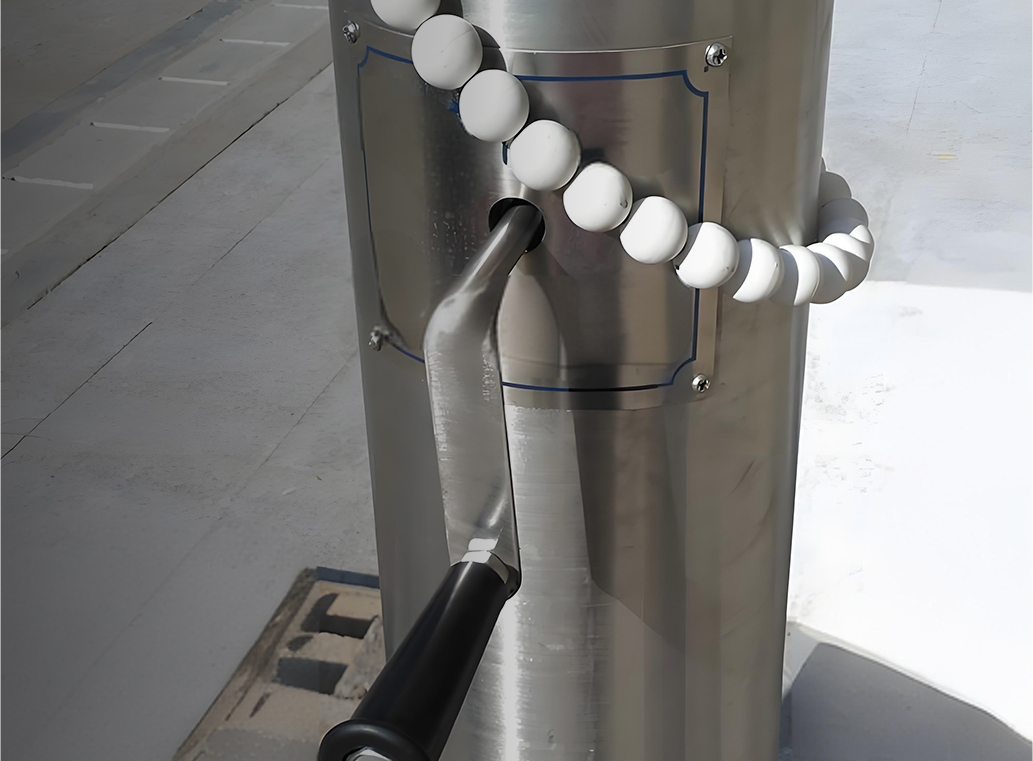
The way the halyard is routed defines two major product families, discussed later in this guide: external halyard flagpoles, where the rope is fully visible, and internal halyard flagpoles, where most of the rope is protected inside the shaft. On tall poles or poles flying heavy flags, a hand crank, a counterbalance system, or an electric winch replaces the simple cleat so that one person can hoist or lower the flag safely and with controlled speed.
Cleat
The cleat sits about 4 to 6 feet (1.2 to 1.8 m) above the base and is the point where the halyard is secured after raising the flag. On external halyard poles, the rope is wrapped around the cleat in a standard figure-eight pattern. On internal halyard poles, a lockable access door covers the cleat, the crank socket, or the motor controls. The cleat position is not an aesthetic detail: it must be reachable from the ground without a ladder, positioned so the halyard enters it at a natural angle, and made of corrosion-resistant material because it is touched more than any other component.
Finial and Optional Fittings
The finial is the decorative top piece: a ball, an eagle, a star, a spear point, or a design matched to an institutional emblem. Beyond decoration, the top of a flagpole can carry several functional fittings. A rotating ball head allows the flag to trail downwind and reduces wrapping. A lightning rod terminal with a down conductor protects the installation in exposed locations. An anemometer mount or wind gauge is common on research and military installations. LED lighting systems, mounted on the shaft or integrated into the truck, keep the flag visible at night, which is a requirement at many memorial and government sites. Two stainless steel snap hooks complete the assembly by connecting the flag grommets to the halyard.
| Component | Primary job | Typical material |
|---|---|---|
| Ground sleeve and foundation | Keeps the pole vertical and transfers wind loads to the soil | Galvanized steel, concrete |
| Shaft | Main structural column; supports the flag at height | Aluminum, stainless steel, titanium |
| Truck and sheave | Carries the halyard at the top; supports the finial | Cast aluminum, cast stainless steel |
| Halyard | Raises and lowers the flag | Polyester rope, steel cable, Dyneema |
| Cleat or winch | Secures the halyard at a comfortable working height | Cast aluminum, marine aluminum, stainless steel |
| Finial, rotating head, snap hooks | Finish decoration, wind orientation, flag attachment | Aluminum, stainless steel, brass |
Flagpole Materials: Aluminum, Stainless Steel, and Titanium
The single most consequential choice in a flagpole purchase is the shaft material. The material decides the weight, the price, the corrosion resistance, and the maintenance interval, and none of the other decisions, including height and lifting system, affects the long-term result as much. This section compares the three dominant shaft materials side by side, followed by a short note on fiberglass for special applications.
Aluminum Alloy: The Standard Workhorse
Aluminum is the default material for outdoor flagpoles worldwide, and for good reasons. Alloys 6063-T6 and 6061-T6, both heat-treated, offer a yield strength of roughly 210 to 280 MPa (30,000 to 40,000 psi), which is ample for poles in the 15-to-60-foot range. The density is about 2.7 g/cm³, one-third that of steel, so a 30-foot pole can be handled by two workers and supported by a modest foundation. Aluminum also forms a natural oxide layer that protects it from general outdoor corrosion. Anodizing adds a thicker, harder surface layer, while PVDF or polyester powder coating adds color and a second line of defense against chalking and fading.
What aluminum requires in return is correct installation practice. It must never be bolted directly to copper, brass, or plain steel fasteners without isolation, because galvanic corrosion will attack the aluminum at the contact point. In coastal environments, specify marine-grade anodizing or a baked fluoropolymer finish, and insist on stainless steel hardware throughout. With moderate maintenance, mainly washing and touch-up of damaged coating, an aluminum flagpole will serve 20 to 40 years. For a school, a park, or a corporate campus, aluminum delivers the best balance of performance and cost. A representative example is the aluminum alloy electric intelligent lifting conical flagpole, which pairs a tapered shaft with a motorized internal lifting system for automated daily raising.
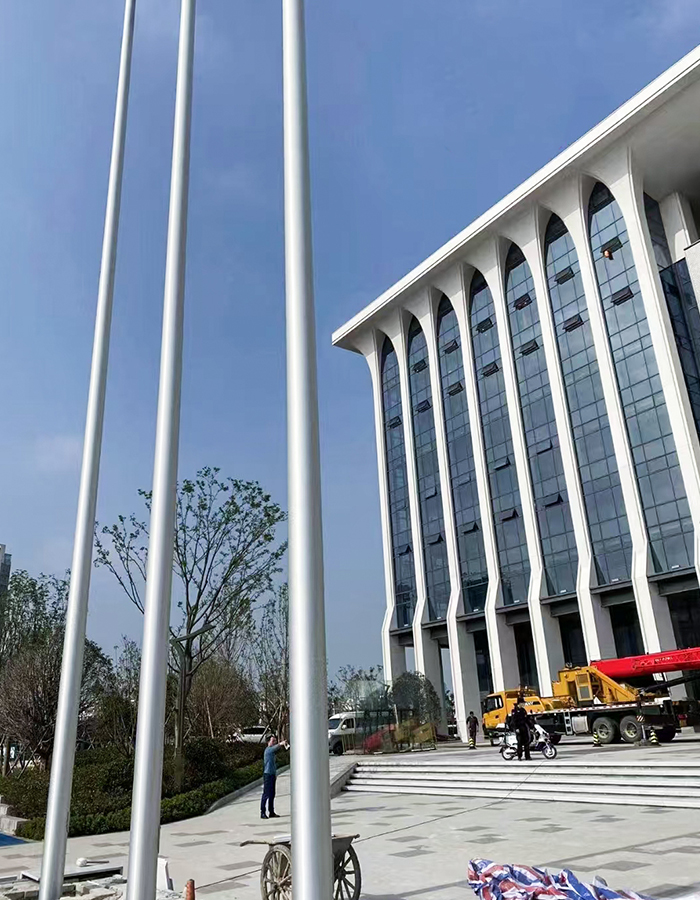 OEM/ODM Aluminum alloy electric intelligent lifting conical flagpole Suppliers, Jiangsu Shengqi Weiye Intelligent Technology Co., Ltd. is China OEM/ODM Aluminum alloy electric intelligent lifting conical flagpole supp...View Product →
Stainless Steel: The Permanent Aesthetic
Stainless steel is chosen where appearance and longevity must be immediately visible. A polished stainless shaft reads as a permanent public investment, which is why it is the material most often seen on government plazas, memorials, and major sports venues. Grade selection is the first decision. Grade 304 is adequate for most inland conditions. Grade 316 contains molybdenum at 2 to 3 percent, which substantially improves resistance to chlorides, so anything within a reasonable distance of the ocean should be specified as 316 or better.
The unavoidable trade-off is weight. Steel is roughly three times denser than aluminum at 7.9 g/cm³, so the shaft, the hinge, and the supporting concrete all become heavier and more expensive. Stainless steel costs more per kilogram than aluminum, and fabrication, especially grinding and polishing welds, adds further cost. The payoff is a shaft that does not need painting, resists scratches and dents better than aluminum, and can be cleaned with a simple stainless polish. A well-maintained 316 pole is expected to last 40 to 60 years without structural deterioration. If the project is a landmark visible to the public every day, stainless is the low-regret option. For a deeper look at selection, installation, and upkeep, see our separate guide to stainless steel flagpoles.
Titanium: The Extreme-Environment Material
Titanium occupies the premium end of the flagpole market. Its density of about 4.5 g/cm³ is only modestly higher than aluminum, yet its strength is in the same league as steel, and its corrosion resistance in seawater is better than both aluminum and standard stainless grades. For a pier, a naval facility, a beachfront monument, or any site where maintenance crews will rarely reach the pole, titanium solves problems that other materials cannot.
The obstacle is cost. A titanium shaft typically costs several times more than an equivalent aluminum shaft, so the decision only makes sense when the expected service life is measured in decades and the cost of replacing the pole is even larger. In those conditions, titanium can actually be the economical choice on a life-cycle basis, because it will not corrode through, will not need repainting, and will not require frequent inspection for pitting. Fabrication demands experience: titanium welding must be done in a controlled atmosphere, and only a manufacturer with dedicated equipment should be trusted with the work.
Fiberglass and Other Materials
Fiberglass poles occupy a small but important niche: locations where electrical conductivity is a danger, such as near power lines, substations, or telecommunications sites. Fiberglass is non-conductive, lightweight, and immune to galvanic corrosion, but it is also more flexible and less rigid than metal, requiring a larger diameter to reach the same stiffness. Its surface, usually protected by a gel coat, can degrade under prolonged UV exposure unless the resin system is specifically formulated for outdoor use. Most buyers choose fiberglass only when an electrical safety requirement makes metal unsuitable.
| Material | Density (g/cm³) | Typical yield strength (MPa) | Coastal corrosion resistance | Relative material cost | Typical service life |
|---|---|---|---|---|---|
| Aluminum 6063-T6 / 6061-T6 | 2.7 | 210–280 | Good, with marine coating | 1× (baseline) | 20–40 years |
| Stainless steel 304 | 7.9 | ~205 | Moderate; not ideal for salt spray | 2–3× | 30–50 years |
| Stainless steel 316 | 7.9 | ~240–290 | Excellent; the standard for coastlines | 3–4× | 40–60 years |
| Titanium, commercial grade | 4.5 | ~275 | Excellent, even in seawater | 8–15× | 40+ years |
| Fiberglass | 1.9–2.1 | Low, flexible | Excellent | 1.5–2× | 20–30 years |
Flagpole Types by Construction and Operation
Once the material is fixed, the next set of decisions concerns how the flagpole is built and how the flag gets up and down. Four distinctions cover the majority of institutional and commercial projects.
Internal Halyard vs. External Halyard
External halyard flagpoles run the rope along the outside of the shaft. They are the least expensive option, they are easy to inspect, and replacing the rope takes minutes. Their drawbacks are that the rope is exposed to sun and weather, it ages faster, and it can slap against the shaft in high winds. External halyards are perfectly acceptable on residential poles and many light commercial installations.
Internal halyard flagpoles route the rope up through the hollow shaft to a pulley at the top, so only a short segment reaches out to the flag. This produces a cleaner appearance, protects the rope from UV damage, reduces tangling, and prevents unauthorized access when the access door is locked. The cost is higher, and installation is slightly more involved, but above 25 to 30 feet, internal halyard is the standard commercial choice. For poles over 10 meters or about 33 feet, most manufacturers recommend internal halyard as the default specification.
Tapered vs. Straight-Shaft Flagpoles
The classic free-standing flagpole is tapered: wider at the base, narrower at the top. Because wind speed generally increases with height, the taper matches the bending stress distribution and gives the pole its characteristic profile. Straight-shaft poles are used mainly for wall-mounted installations, indoor flagpoles, and decorative applications where a taper is not required. Tapered shafts also shed water more effectively at the base, which is a small but meaningful detail in wet climates.
Manual, Counterbalanced, and Electric Lifting Systems
The lifting mechanism determines how the flag is raised every morning, and the right choice depends on pole height, flag weight, and operating schedule.
Manual systems are the default on residential and light commercial poles: a halyard and a cleat, with a hand crank on larger internal halyard models. They are reliable, cheap, and independent of any power supply. For a 20-foot pole, manual is the correct answer.
Counterbalanced internal halyard systems use a counterweight inside the shaft so that raising a large flag takes much less effort. The flag is attached to a short exposed length of halyard; pulling the halyard down hoists the flag, and the counterweight holds it in position. This is an elegant middle ground for poles up to about 40 feet, where a motor is unnecessary but a plain rope would be hard to manage.
Electric lifting systems add a motorized winch at the base, controlled by a key switch, a remote, or an automated timer. They are standard on stadium poles and high-traffic installations where the flag is raised daily on a schedule. A properly engineered electric system includes limit switches that stop the flag at the correct height, an optional wind sensor that lowers the flag automatically in dangerous gusts, and a manual override for power failures. The added cost is justified when automatic operation, safety, or convenience is a firm requirement. A good example of this category is the conical stainless steel intelligent electric lifting flagpole, which combines a corrosion-resistant tapered shaft with a motorized internal lifting system.
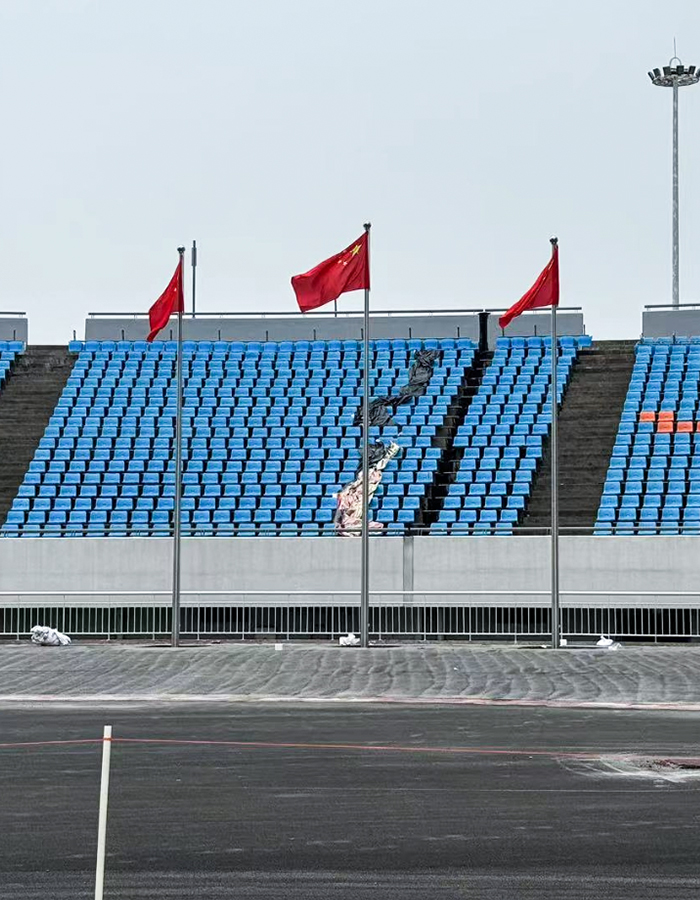 OEM/ODM Conical stainless steel intelligent electric lifting flagpole Suppliers,Jiangsu Shengqi Weiye Intelligent Technology Co., Ltd. is China OEM/ODM Conical stainless steel intelligent electric lifting flagpole sup...View Product →
Outdoor, Indoor, and Award Configurations
Most flagpoles are free-standing outdoor poles set in concrete, but two other configurations matter in institutional projects. Indoor flagpoles are shorter, often 6 to 15 feet, and are bolted to a wall or mounted on a weighted base. They use the same halyard principle, but they appear in auditoriums, lobbies, and conference halls where the flag is a permanent indoor display.
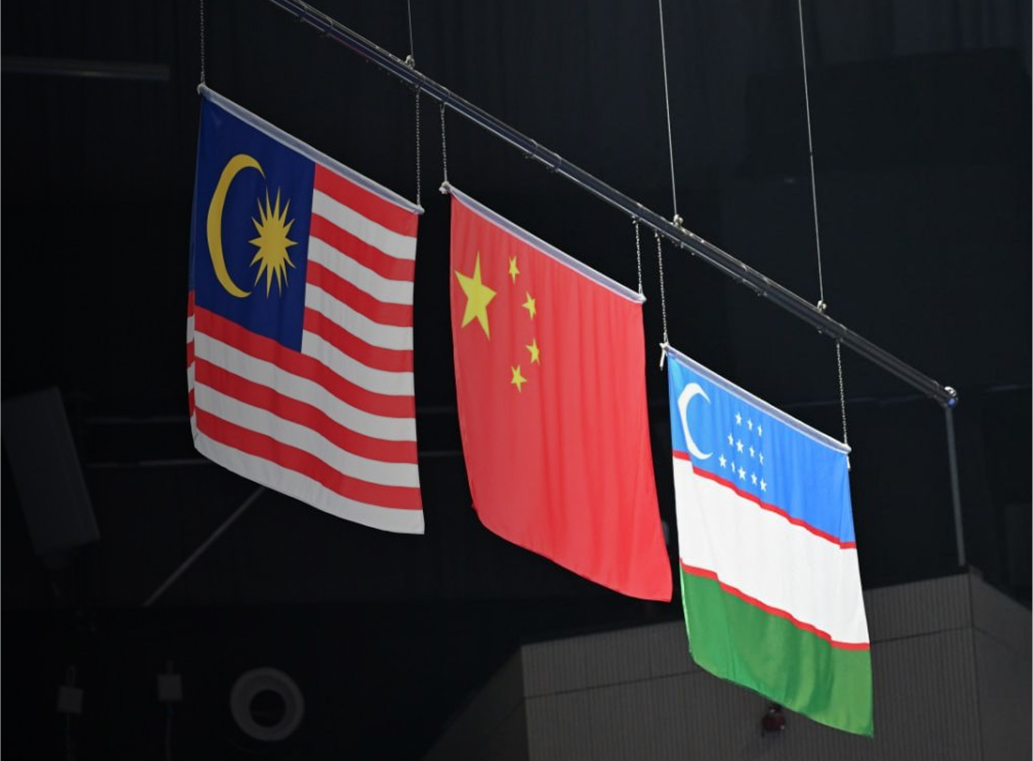
Award or ceremonial flagpoles are a specialized solution for medal ceremonies. Instead of a vertical shaft, they hold three or more flags horizontally on short arms so that winners' flags can be presented at a podium. These units are a staple of track-and-field and multisport events. Many stadium projects combine an outdoor flagpole, an award flagpole, and a reviewing stand for opening ceremonies; the factory behind this article manufactures all three categories, which simplifies procurement when a venue needs a complete package.
Standard Flagpole Heights and Flag Sizing
Height is the second decision that shapes a project, driven by the surrounding architecture and by the size of the flag that will be flown. The two should never be chosen independently. For most sites, a practical starting rule is that the flag length should equal roughly one quarter to one third of the flagpole height. A 20-foot pole works with a 4 by 6-foot flag, a 30-foot pole carries a 5 by 8-foot flag, and a 40-foot pole is matched with a 6 by 10-foot flag. These combinations keep the flag readable from the ground while keeping wind loads within the designed range.
| Flagpole height (ft) | Recommended flag size (ft) | Typical applications |
|---|---|---|
| 15–20 | 3×5 to 4×6 | Residential gardens, retail frontages |
| 20–25 | 4×6 to 5×8 | Schools, office buildings, churches |
| 25–30 | 5×8 to 6×10 | School campuses, hotel entrances |
| 30–40 | 6×10 to 8×12 | Municipal buildings, public parks |
| 40–50 | 8×12 to 10×15 | Government facilities, regional plazas |
| 50–70 | 10×15 to 12×18 | Stadiums, convention centers |
| 70–100 | 12×18 to 20×30 | Memorials, landmark installations |
For residential homes, a widely used guideline is that the flagpole should reach at least the highest point of the roof, and preferably extend 5 feet above it, so that the flag flies clear of the building rather than against it. Near a building, the pole should also be set back at a distance at least equal to the flag length so the flag does not slap against the façade.
For schools, most campuses install poles between 20 and 35 feet, and the choice depends on the building height and the size of the flag that represents the institution. You can read the specific guidance in our article on the typical height of a flagpole on a school campus. For civic and memorial sites, 60 to 100 feet is common. The tallest flagpoles in the world, located in the Middle East and North Africa, exceed 200 meters, about 650 feet, which shows how far the engineering can be pushed when a flagpole is intended as a national landmark.
The danger of oversizing a flag is not merely aesthetic; it is structural. A flag that is too large multiplies wind drag on the shaft, strains the halyard and truck, and can fatigue the welds over time. Always follow the manufacturer's height-to-flag chart rather than buying the largest flag that physically fits the grommets.
Wind Behavior, Flag Orientation, and Rotating Tops
Wind is the force that a flagpole is engineered against, and everything else about the structure follows from the wind load. The dynamic pressure of wind rises with the square of speed, which is the single most important number to understand. At 60 km/h, about 37 mph, the pressure on a flat surface is roughly 170 Pa, or 3.5 pounds per square foot. At 120 km/h, about 75 mph, the pressure jumps to roughly 680 Pa, or 14 pounds per square foot. A storm that is twice as fast does not push twice as hard; it pushes four times as hard.
When wind speed doubles, the load on a flagpole quadruples, which is why structural calculations always use the worst-case gust for the site rather than the average daily wind. Even though flags are usually lowered in severe weather, the pole itself must survive the gusts it encounters when nobody is watching it. In exposed coastal or mountain locations, design gusts can easily exceed 150 km/h, and the foundation, the shaft wall thickness, and the weld quality are all sized around that number.
Flag orientation is part of the same engineering story. A conventional flag is attached to the halyard at two points, and unless the truck or the ball at the top can rotate, the flag tends to wrap around the shaft as the wind shifts. The solution is a rotating head: a spherical or cylindrical top that spins freely on a bearing so that the flag trails directly downwind without encircling the pole. The flagpole downwind rotating ball head is a popular accessory for exactly this reason. It does not eliminate all wrapping on multi-flag installations, but on a single-flag pole it greatly reduces tangling incidents and extends the life of both the flag and the halyard. If the site is in a windy area, this modest accessory is often the cheapest reliability upgrade available for the entire pole.
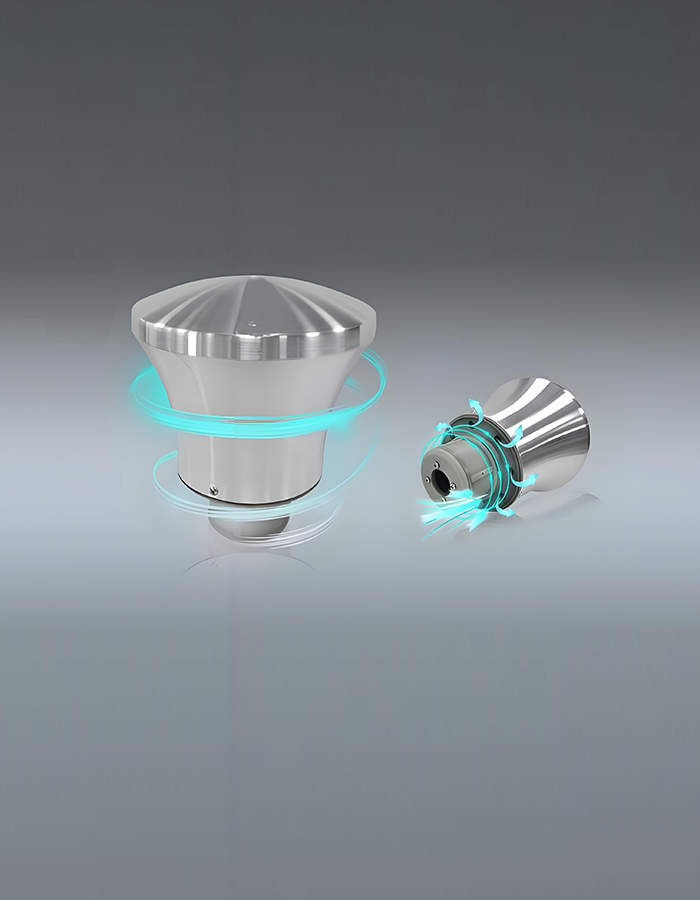 OEM/ODM Flagpole downwind rotating ball head Suppliers, Factory - Jiangsu ShengqJiangsu Shengqi Weiye Intelligent Technology Co., Ltd. is China OEM/ODM Flagpole downwind rotating ball head suppliers and factory,The f...View Product →
What to Check Before Buying a Flagpole
The difference between a reliable flagpole and a problem installation is rarely visible in a photograph. Five specifics separate a responsible manufacturer from a reseller offering generic tubes, and each one can be verified before you issue a purchase order.
Wall Thickness and Wind Rating
Ask for the shaft wall thickness and the wind speed for which the pole is rated. A 20-foot aluminum pole should have a wall of at least 0.1 inch (2.5 mm). A 40-foot pole should be in the range of 0.1875 to 0.25 inches (4.8 to 6.4 mm). The supplier should state the design wind zone clearly and should be able to provide structural calculations if your engineer requests them. Any manufacturer that cannot answer this question in writing should be excluded from the bidding process.
Straightness and Manufacturing Tolerances
Deviations in straightness become visible the moment a pole is installed, and they are difficult and expensive to correct. A reputable manufacturer inspects straightness during production, holding tolerances on the order of 0.5 percent of the pole length or better. Check also that the base and top diameters match the product drawing. A pole that is noticeably thicker at the base than specified is usually hiding a lack of proper taper, which means more material than necessary and a profile that does not match the load calculation.
Welds and Joints
On sectional poles, welds are the point where failures begin. TIG welding, also called gas tungsten arc welding, produces the strongest and cleanest joints when performed with full penetration. MIG welding is faster and cheaper but leaves a more visible weld bead and a higher risk of porosity, which allows moisture into the joint. Inspect the weld zone on a sample product: it should be smooth, free of pits, and ground flush on the exterior. The manufacturer should also document the welding standard used in production.
Surface Finish and Corrosion Protection
The finish determines how the pole looks after five years of sun, rain, and salt air. For aluminum, require anodizing of at least 15 to 20 microns, or a PVDF or polyester powder coat formulated for outdoor use. For stainless steel, specify a uniform brushed finish that hides fingerprints and remains easy to maintain. For coastal sites, never accept a standard inland finish. Ask explicitly for a marine-grade coating system, and confirm that all bolts, cleats, and snap hooks are stainless steel rather than zinc-plated carbon steel.
Supplier Credentials and Project Evidence
Because commercial flagpoles are safety-relevant structures, the supplier's own capability matters. ISO 9001 certification is the baseline for manufacturing quality management, and ISO 14001 and OHSAS 18001 indicate that the factory manages environmental and occupational safety processes as well. Look for an in-house factory rather than a trading company, and ask for project references in the relevant sector. The manufacturer behind this article operates from an 8,000-square-meter factory with five workshops, ships more than 50 units daily, and has supplied products for events including the Beijing Olympic Games, the Asian Games, the Winter Olympics, and the World Expo. That level of operation is what makes it possible to provide structural drawings, load data, and warranty support in writing, which is exactly the documentation your project needs.
Installation and Long-Term Maintenance
A flagpole is only as good as the foundation under it. Poorly mixed concrete, a sleeve that is not plumb, or a base that drains water toward the shaft will shorten the life of any pole, regardless of how well it was manufactured. The standard sequence is straightforward: excavate the hole to the footing plan, set the reinforced ground sleeve, check verticality in two directions with a level, pour the concrete and allow it to cure, insert the shaft, attach the truck, run the halyard, and test-raise the flag. On internal halyard poles, orient the access door toward the side that will be used most often during daily operation, and make sure the lock mechanism is protected from rain. In freeze-prone climates, position the top of the sleeve above the water table and ensure the surrounding soil drains; otherwise, freezing water can shift the pole out of plumb.
Ongoing maintenance is not demanding, but it must be scheduled. The aluminum flagpole maintenance process typically includes washing the shaft with mild soap and water twice a year, inspecting the halyard for chafing before winter, replacing the rope every two to four years, lubricating the truck bearing annually, touching up coating damage promptly before corrosion begins, and checking the foundation for cracks or leaning after major storms. Stainless steel poles need the same inspection schedule, plus occasional polishing if the specification calls for a mirror finish. Titanium poles require the least attention, which is precisely why they are specified for locations where maintenance access is difficult.
If the material and lifting system were chosen correctly for the site, maintenance stays a short checklist. If the material was wrong for the environment, no amount of maintenance will compensate. That is why every flagpole specification should begin with a clear statement of the site's wind zone, salt exposure, and available access for future servicing.
Final Thoughts
Defining a flagpole sounds trivial until you have to buy one. A flagpole is a tapered structural column, a mechanical lifting system, a wind-orientation device, and a foundation assembly, all working together so that a flag can be displayed with dignity and reliability for decades. The working definition worth remembering is this: a flagpole is a structure engineered to raise, display, secure, and preserve a flag under the specific conditions of its location.
Every specification should start with the location's wind zone and corrosion environment. Then choose the material, the height, the flag size, and the halyard or lifting system, in that order. The sizing tables in this article cover the most common configurations, and the procurement checks will help you evaluate any supplier's claims. If you follow that sequence and buy from a manufacturer that can publish real engineering data, the pole installed today will still be flying the flag when the next generation takes over the project.
Previous Post
How to Attach a Flag to a Flagpole With a Sleeve: Detailed Step-by-Step Guide
Next Post
How to Lower a Flag on a Flagpole: Step-by-Step Guide for Safe Lowering
News
-
-
1. Understanding the Importance of Regular Maintenance for Aluminum Alloy Flagpoles Regular maintenance of your aluminum alloy flagpole is essential ......
READ MORE -
Unique advantages of aluminum alloy: Why it is the preferred material for flagpoles In today's society, flagpoles are not only a tool for displaying f......
READ MORE -
What is the aluminum alloy electric intelligent lifting conical flagpole? The aluminum alloy electric intelligent lifting conical flagpole is a high-e......
READ MORE

Copyright Jiangsu Shengqi Weiye Intelligent Technology Co., Ltd. All Rights Reserved.
 Custom Commercial Flagpoles Suppliers